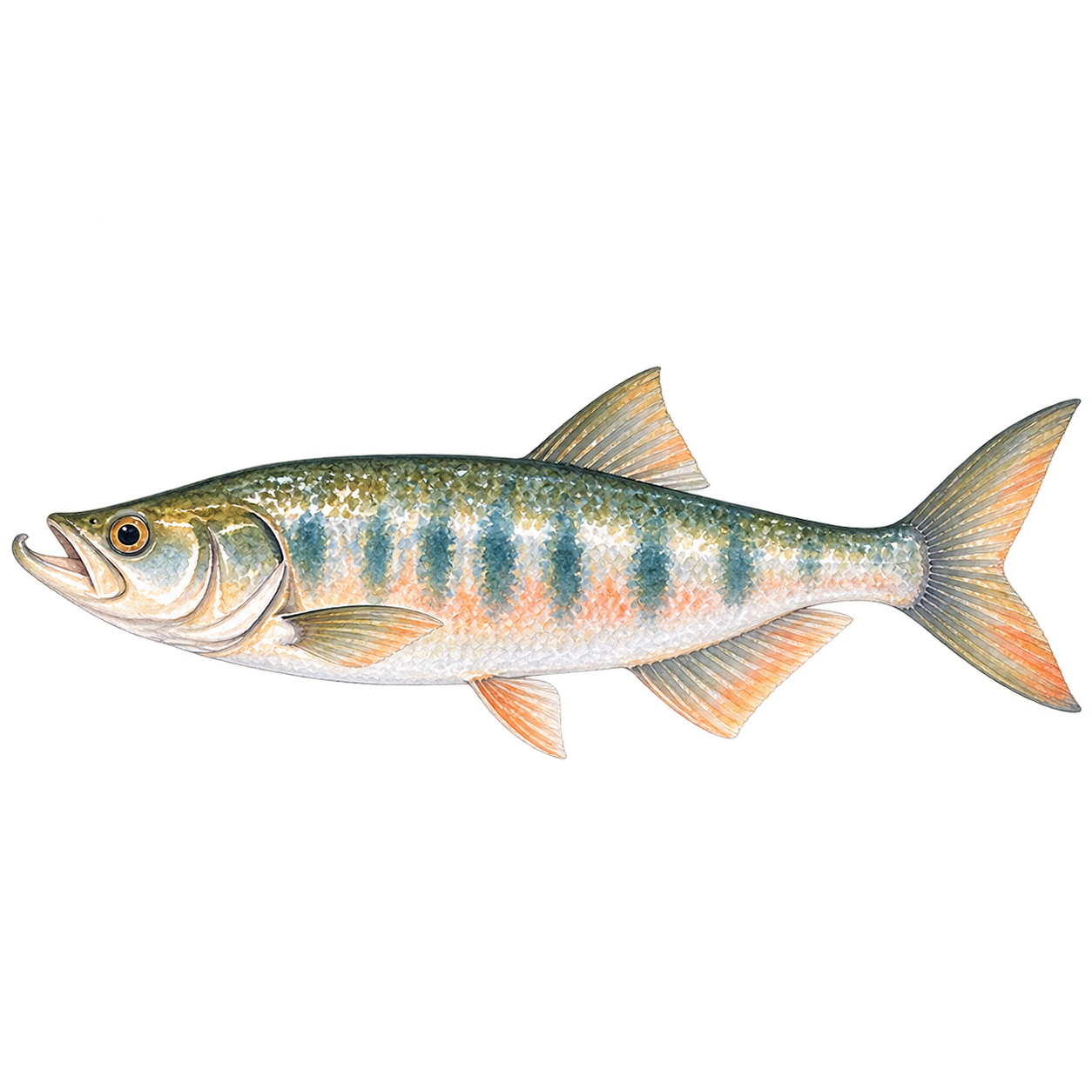
Chinese Hooksnout Carp
- Water
- Freshwater
- Habitat
- Clear streams, shallow runs and current changes, feeding on insects and small prey.
- Lure guidance
- Scale down spinners, softbaits or flies and keep light line and lures within the rod’s rating.
Behavior and tackle
These local examples use the middle and lower Yangtze climate for monthly activity and do not represent every species in a group.
Hook Snout Carp · Stream Fish Opsariichthys bidens
A small predator of clear streams; breeding males are brightly colored, and it has a large, curved mouth. Often found mixed with other stream fish such as the pale chub (Zacco platypus), it is the main target of micro lure fishing: light tackle, lots of fun.
Habitat
- Clear, flowing mountain streams and small rivers
- Seams between fast and slow water, eddies behind rocks
- Where riffles meet deep pools
Behavior
- Feeds in the mid to upper water column, chasing aquatic insects and small fish.
- Easily spooked: approach quietly and keep your shadow off the water.
Monthly activity
Recommended Tackle
- Rod
- UL 5'0"–6'0", fast action or solid tip
- Reel
- Spinning 500–1000, or a BFS baitcaster
- Line
- PE #0.2–0.4 + fluoro leader 2–4 lb, or mono 2–4 lb
- Small 0.5–3 g spoons, spinners and minnows are the standard.
- Use barbless hooks for quick, harmless release.
Lure options
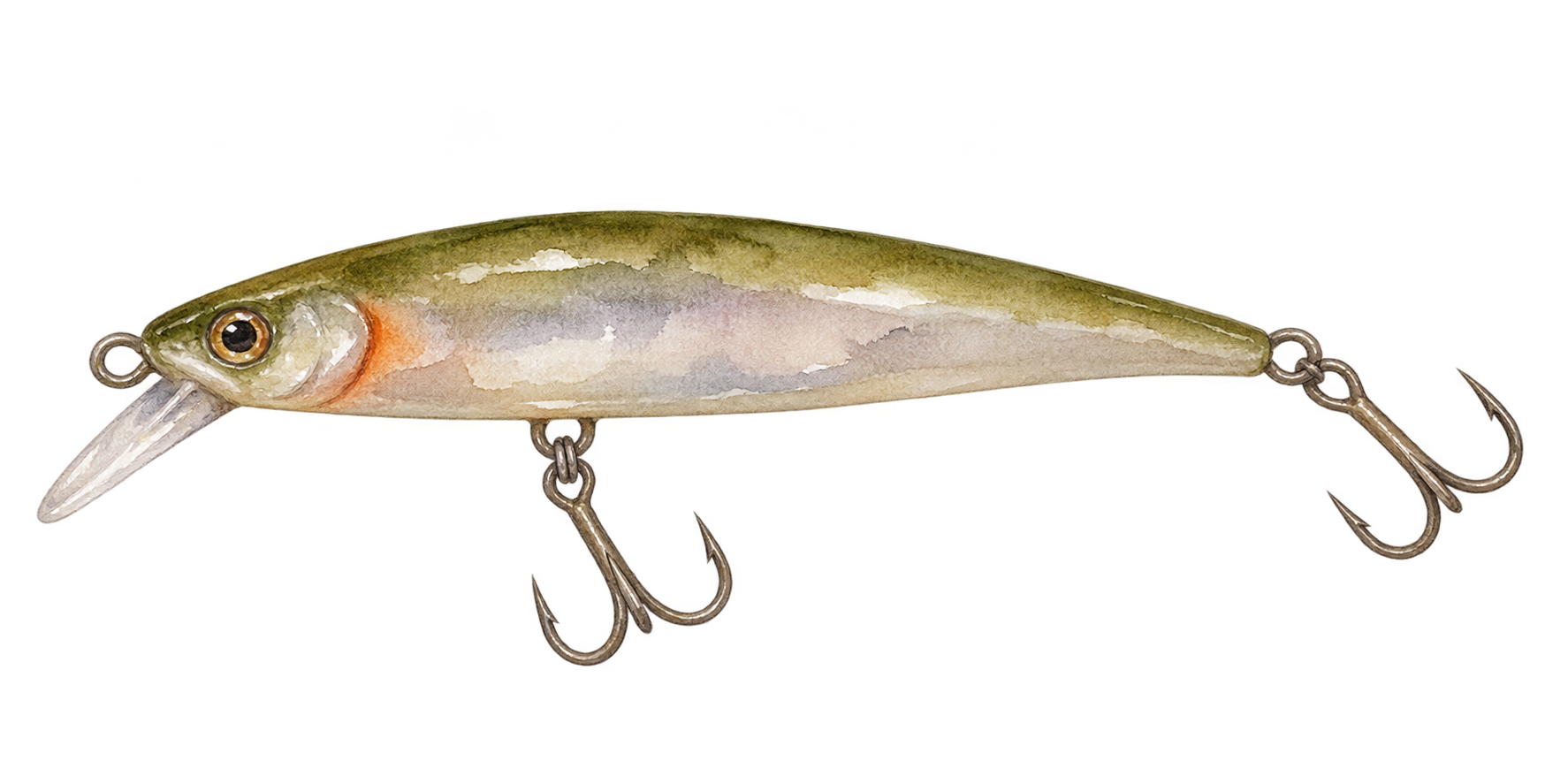
Minnows / Jerkbaits
Slender hardbaits that imitate swimming baitfish on a steady retrieve and dart on short twitches.
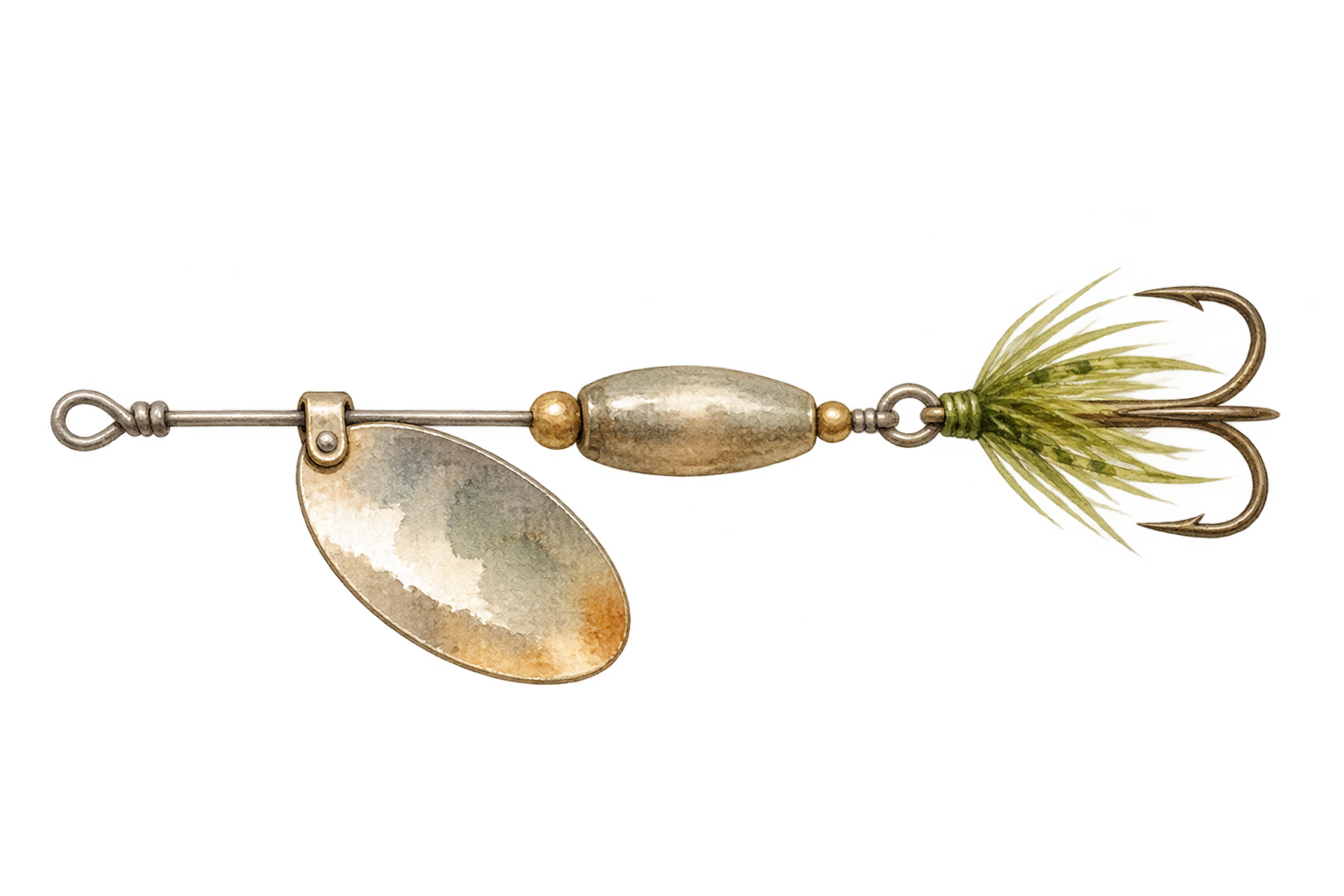
Inline Spinners
A blade rotates around a central shaft; useful in streams and open water with widely varying model weights.
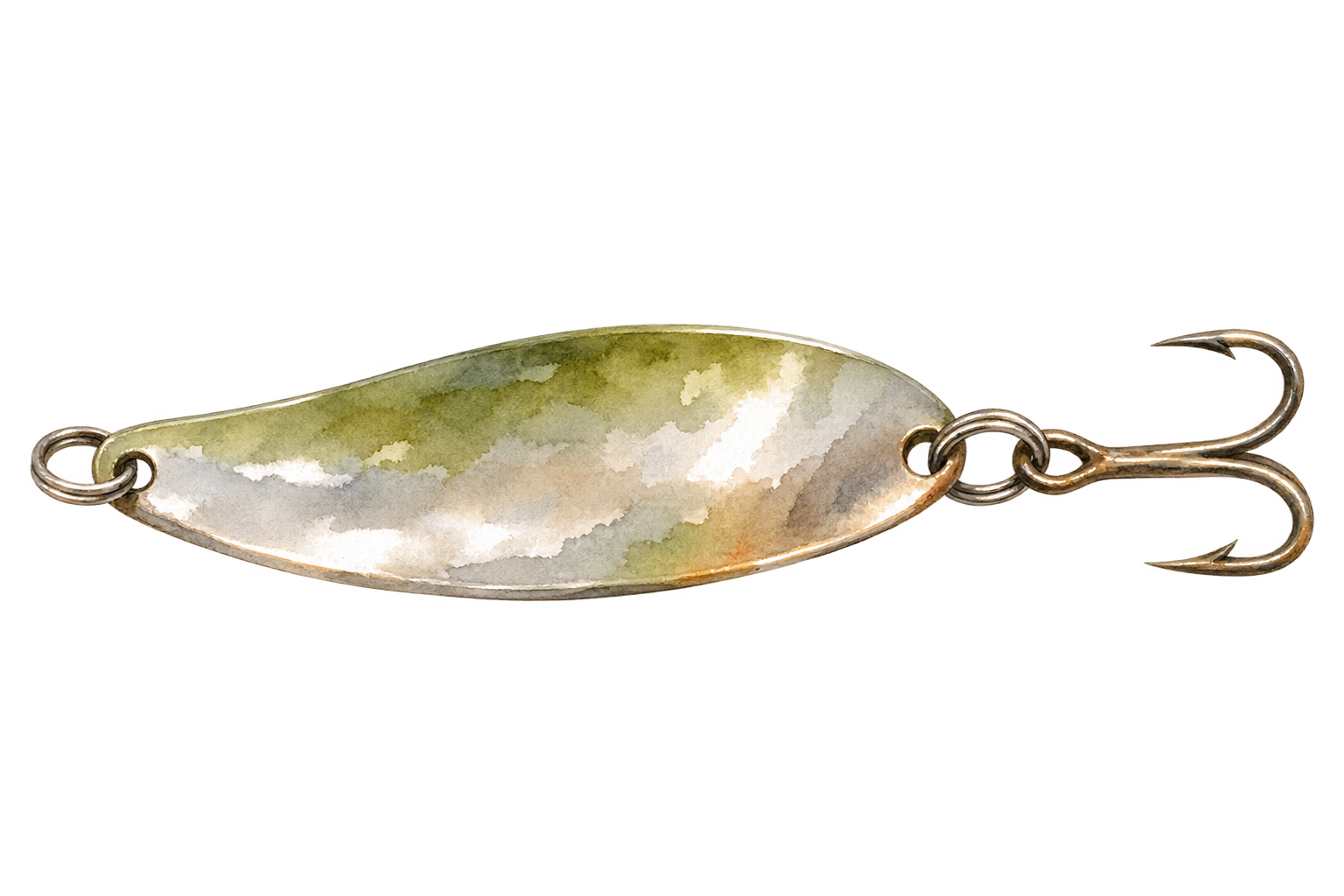
Spoon-shaped lure
Curved metal flashes and wobbles on retrieve and fall; casting, trolling and vertical models work differently.
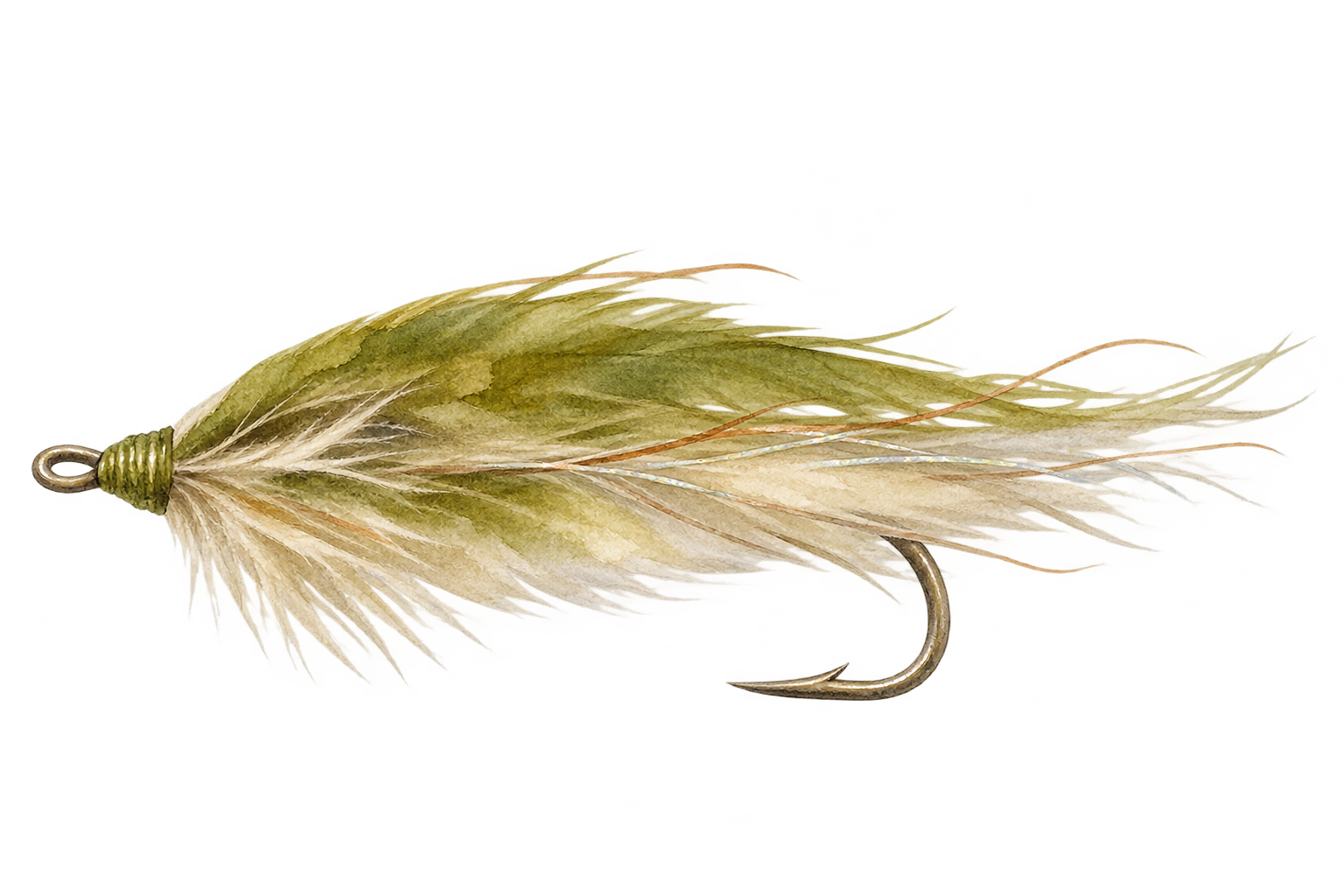
Artificial Flies
Imitations tied from feathers, hair or synthetics; dry flies, nymphs and streamers require distinct presentations.