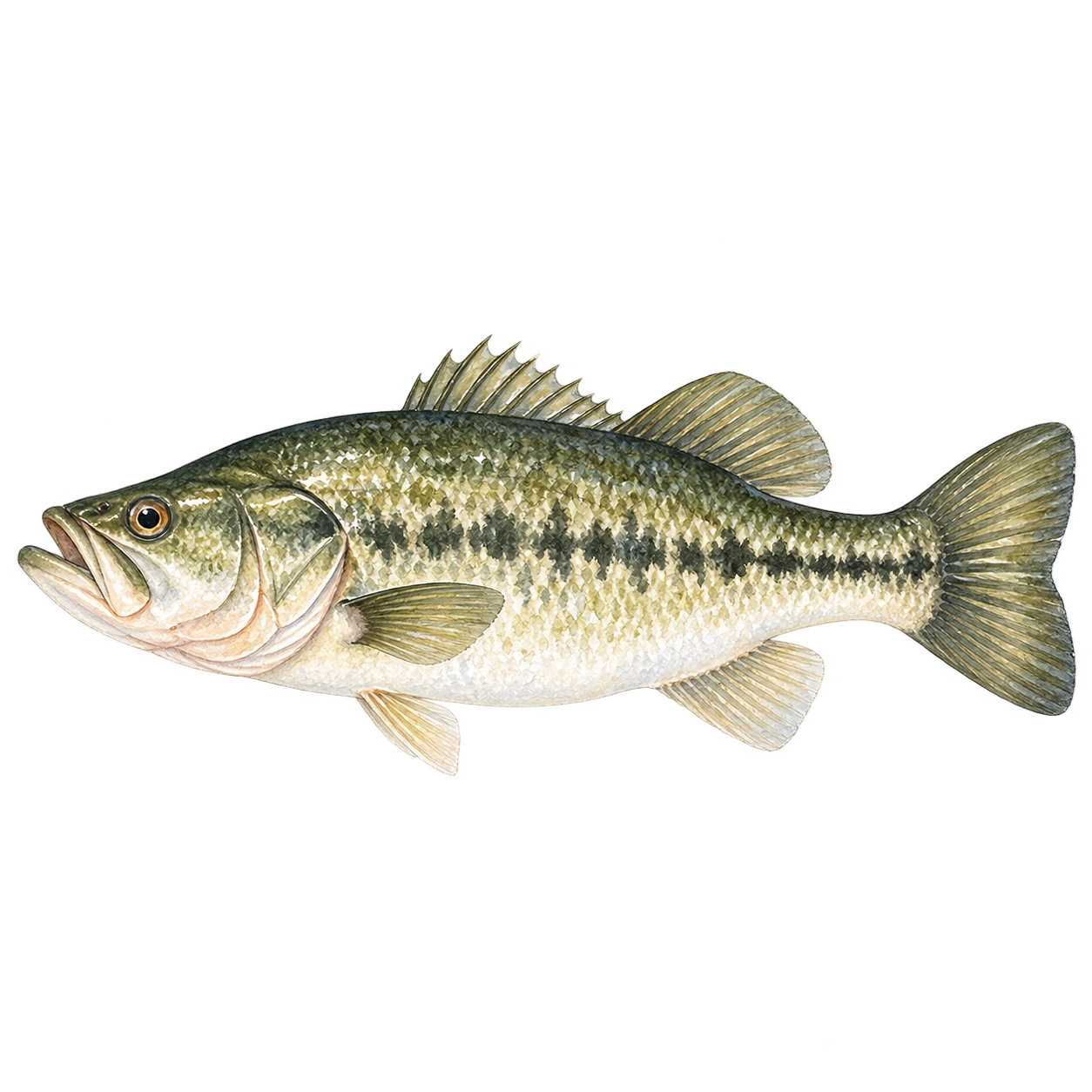
Largemouth Bass
- Water
- Freshwater
- Habitat
- Grass edges, wood and docks in lakes and ponds.
- Lure guidance
- Search cover edges, then slow down with plastics; finesse and heavy-cover tackle are different tools.
Behavior and tackle
These local examples use the middle and lower Yangtze climate for monthly activity and do not represent every species in a group.
Largemouth Bass Micropterus salmoides
Native to North America, it was brought to China for aquaculture in the 1980s and is now widespread in reservoirs, lakes and ponds across the south. The most studied lure fish in the world, it can be caught on almost any lure and is considered the “textbook” species of lure fishing.
Habitat
- Relates to structure and cover: weeds, fallen trees, rock piles, docks, bridge pilings
- Still or slow water, clear to moderately stained
- Farm ponds, reservoirs, lakes, park ponds
Behavior
- An ambush predator that often hides in the shade of cover, waiting for prey to swim by.
- In spring, when the water warms to about 15–20 °C, it moves shallow to build nests and spawn; males guard the nest.
- In summer it retreats deep or into shade by day and feeds shallow early and late; in fall it chases baitfish and is very active; in winter it schools up deep and turns sluggish.
Monthly activity
Recommended Tackle
- Rod
- Casting M–MH 6'6"–7'2" (hard baits, Texas rigs, jigs); spinning ML–M 6'6"–7'0" (finesse plastics)
- Reel
- Baitcaster size 70–100; spinning 2500
- Line
- Straight fluoro 10–16 lb, or PE #0.8–1.2 + fluoro leader
- Cover water fast with hard baits to find fish, then slow down with soft plastics on the structure where they are.
- Its mouth is rough with no sharp teeth, so you can lip it with your thumb (with big fish, don't hold them straight up by the jaw, which can injure it).
Lure options
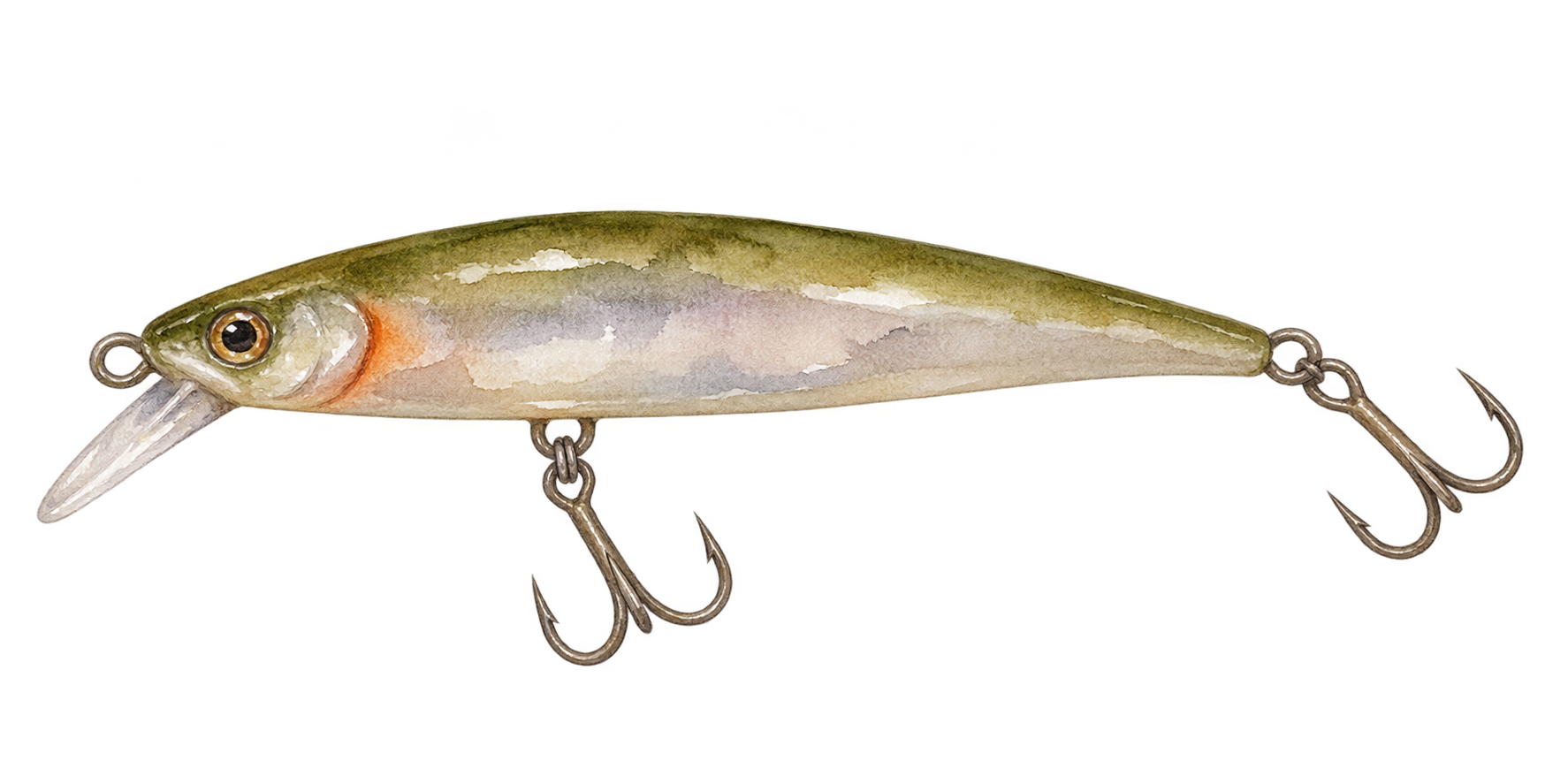
Minnows / Jerkbaits
Slender hardbaits that imitate swimming baitfish on a steady retrieve and dart on short twitches.
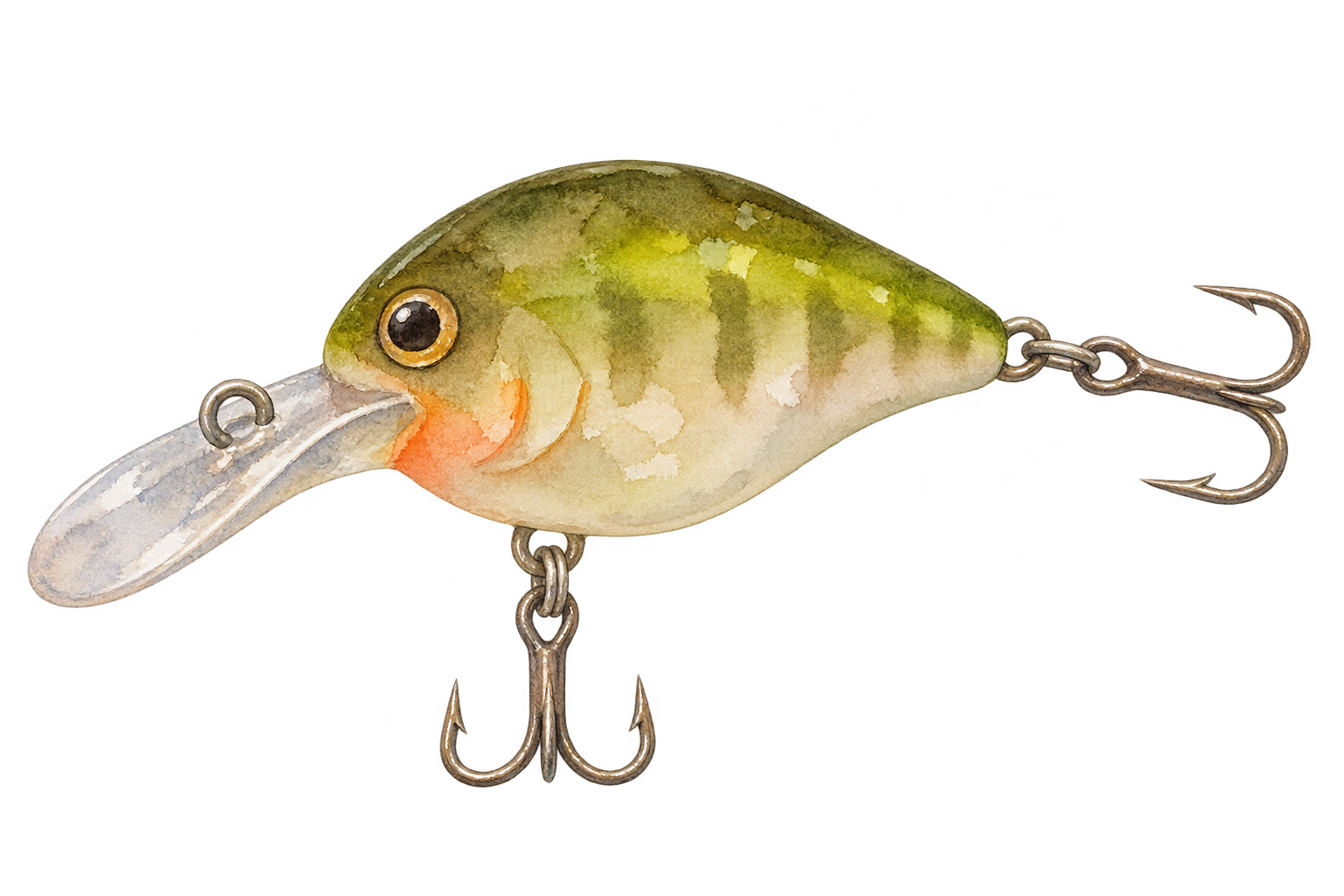
Lipped Crankbaits
Rounded hardbaits that dive and wobble using a lip; the family includes shallow, medium and deep runners.
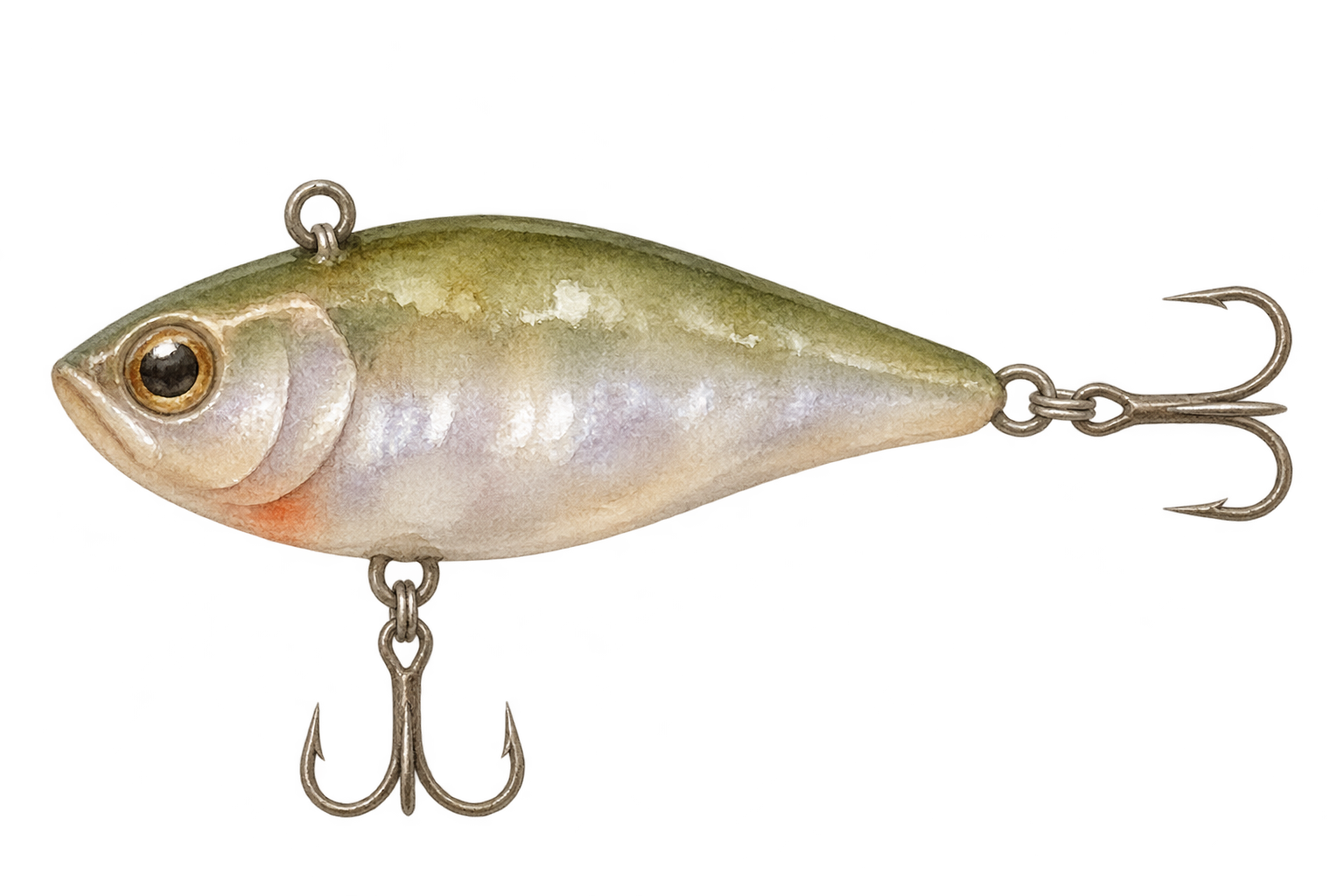
Lipless Crankbaits
Flat-sided hardbaits with a back line tie and a tight vibration, distinct from thin metal blade baits.
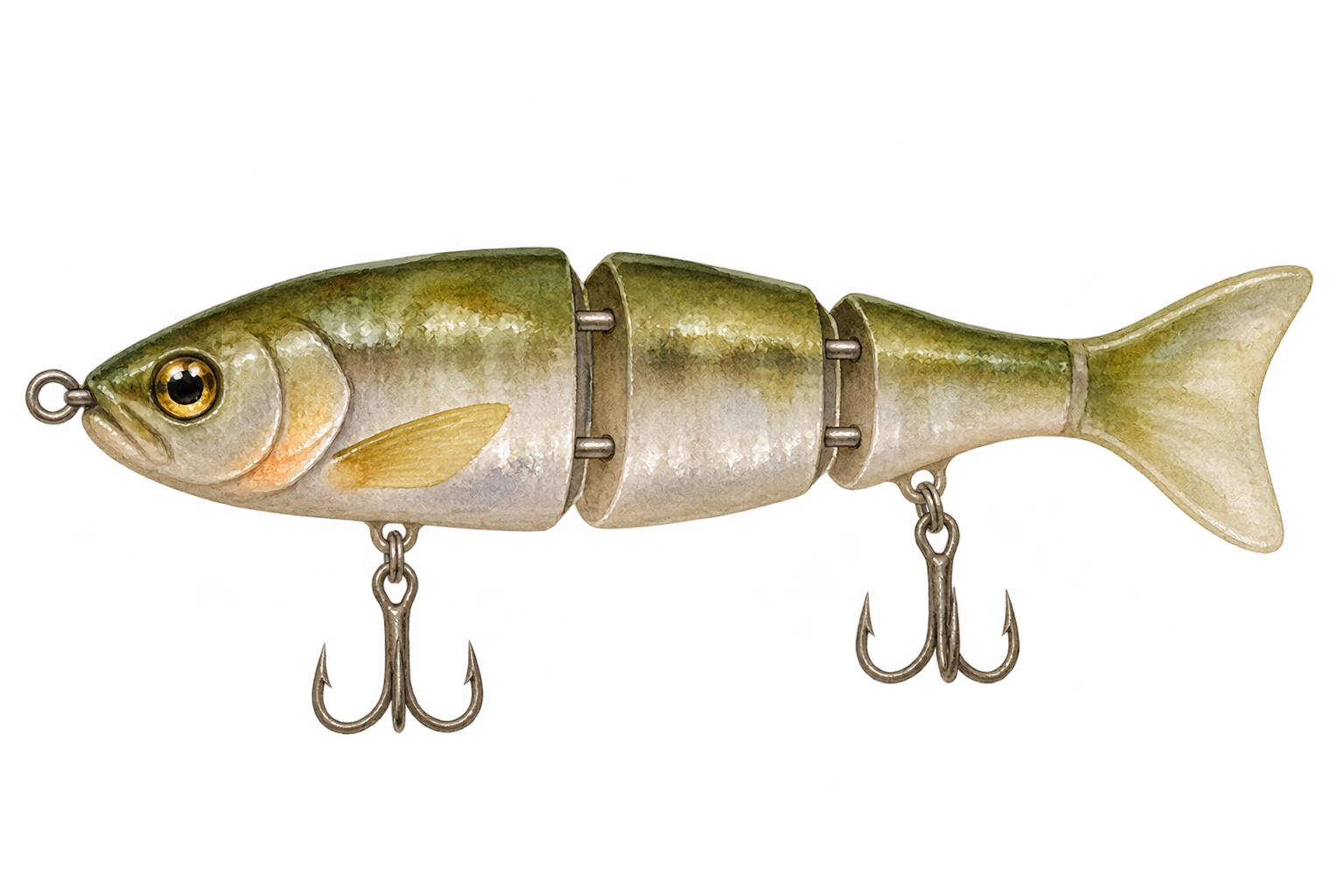
Jointed Swimbaits
Multi-jointed bodies swim with an articulated baitfish action; soft paddletails and glide baits have separate entries.
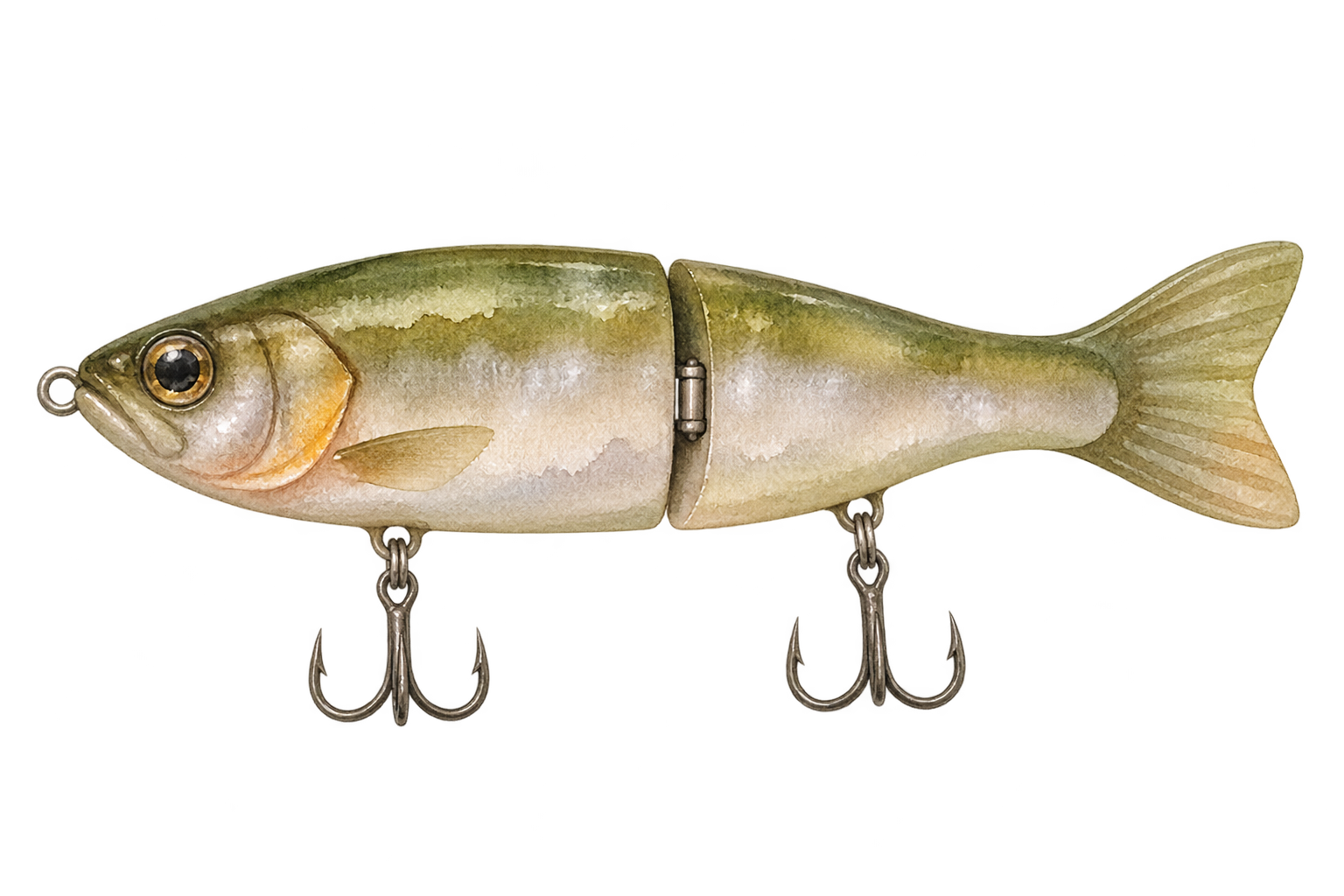
Glide Baits
Baitfish imitations built for side-to-side glides, often with one joint; this is not the same as a line-through softbait.
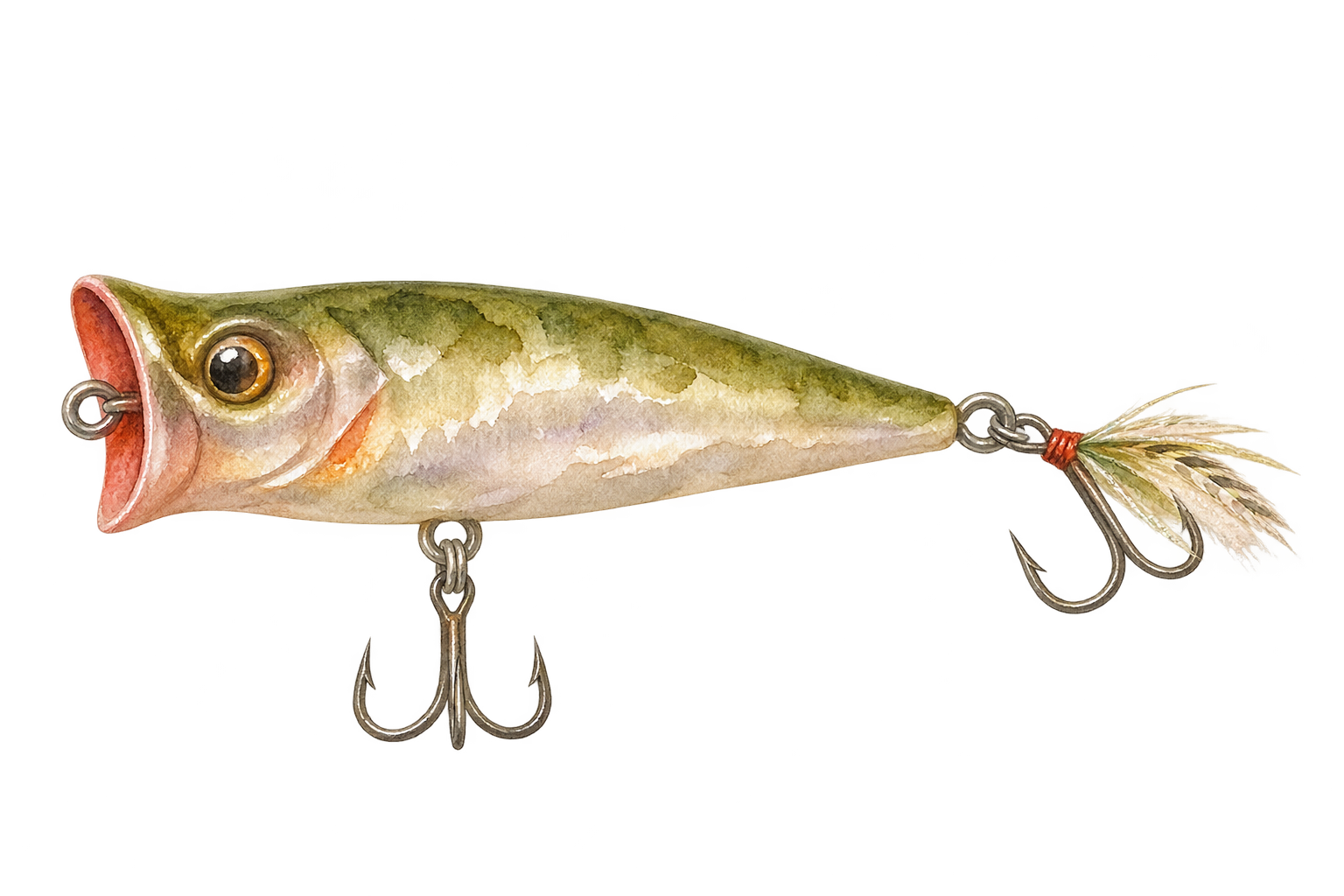
Popper
A cupped mouth pushes water to produce surface disturbance, unlike a frog or wire-frame buzzbait.
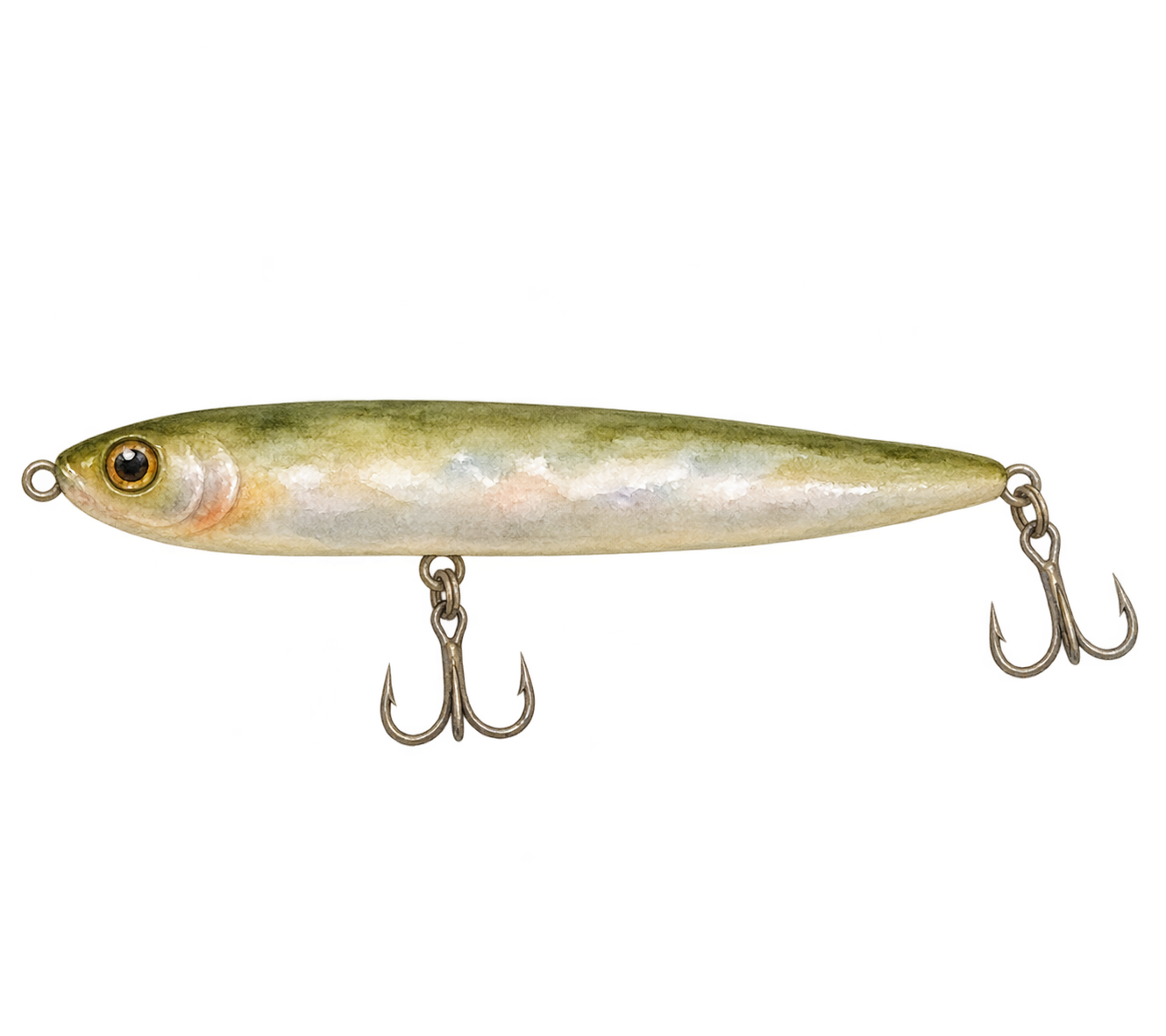
Walking Baits
Slim floating hardbaits worked with short twitches and slight slack to walk side to side.
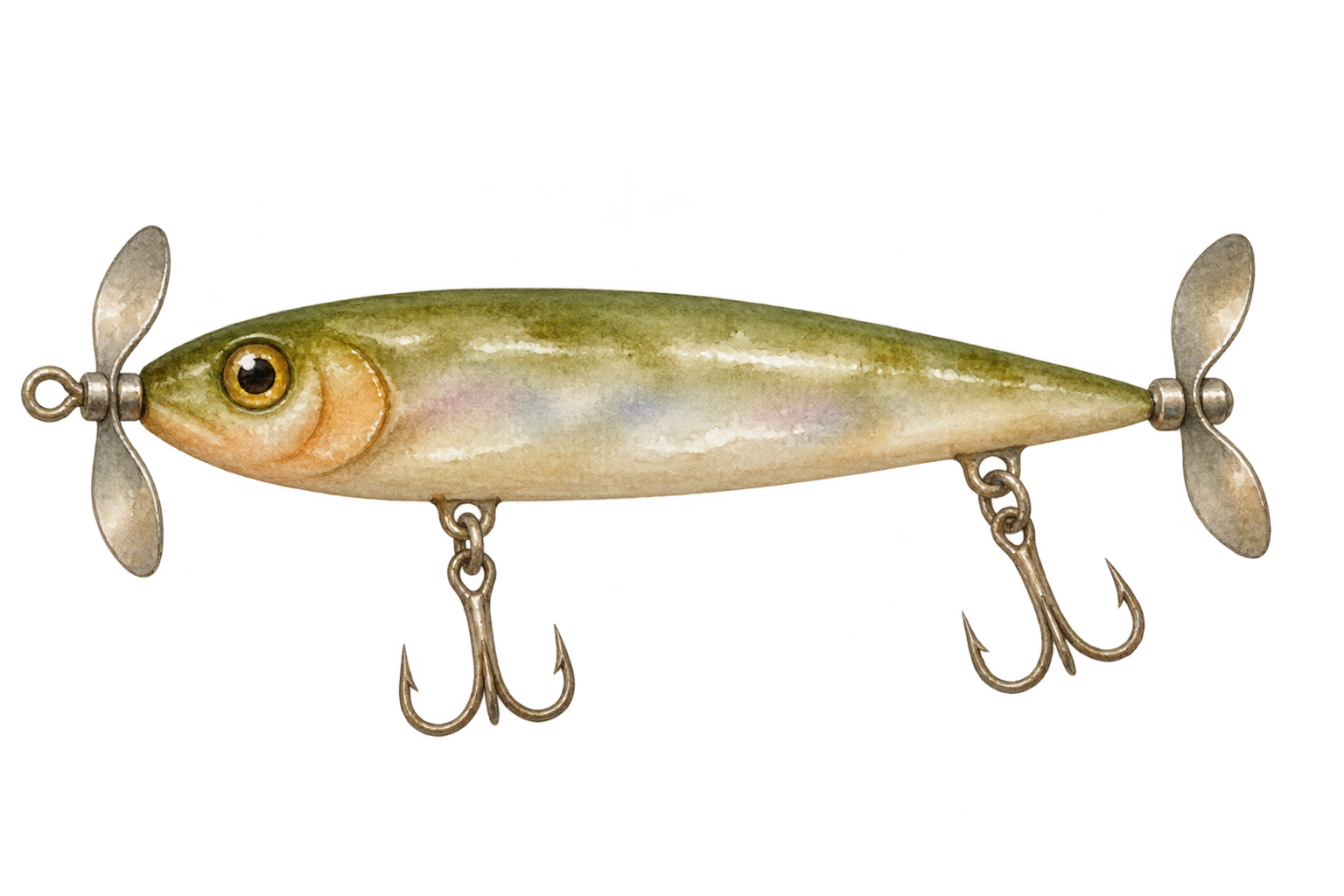
Prop Baits
Body-mounted propellers disturb the surface and leave an audible wake.
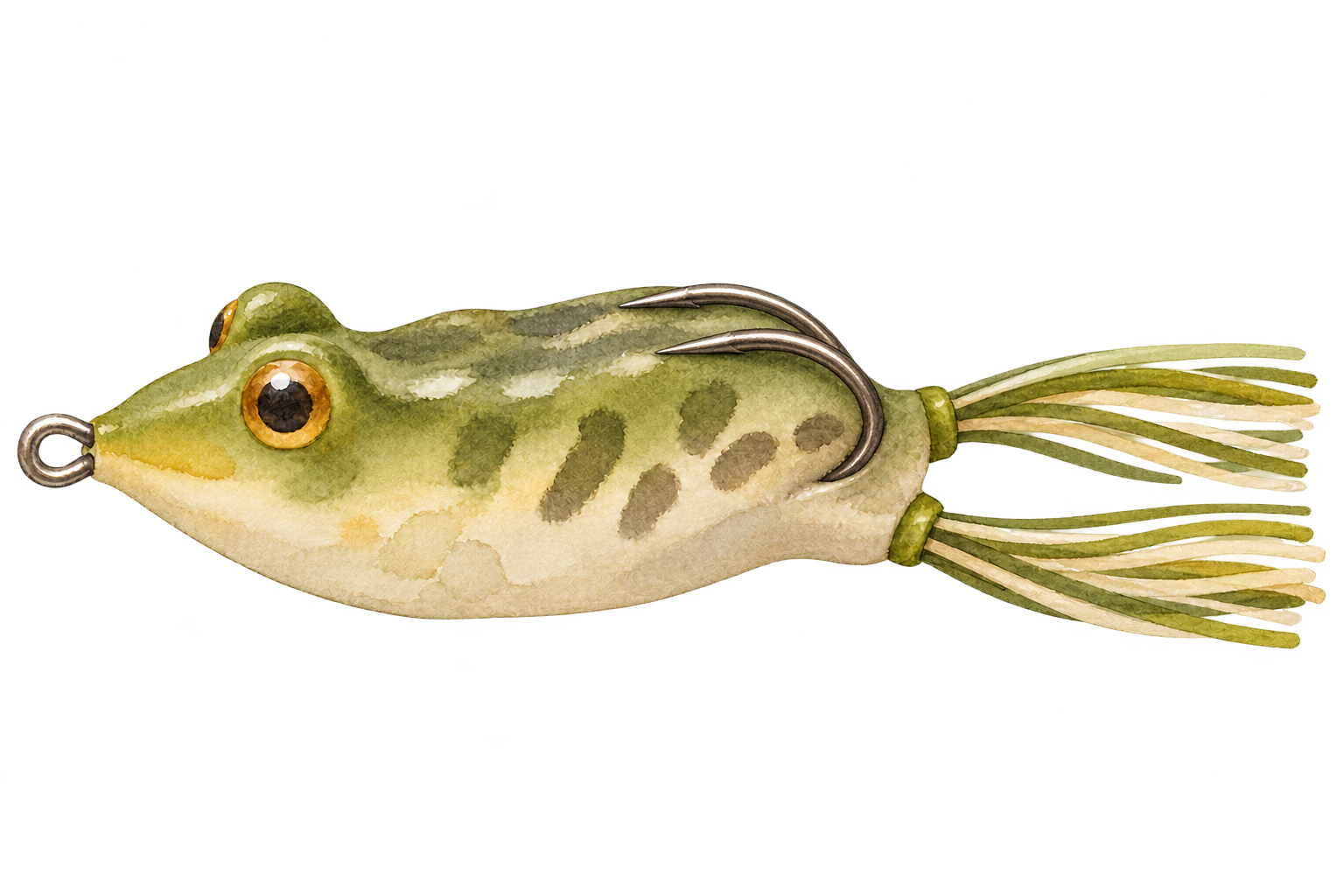
Hollow-Body Frogs
A collapsible hollow body with protected hook points for surface vegetation; snag-resistant is not snag-proof.
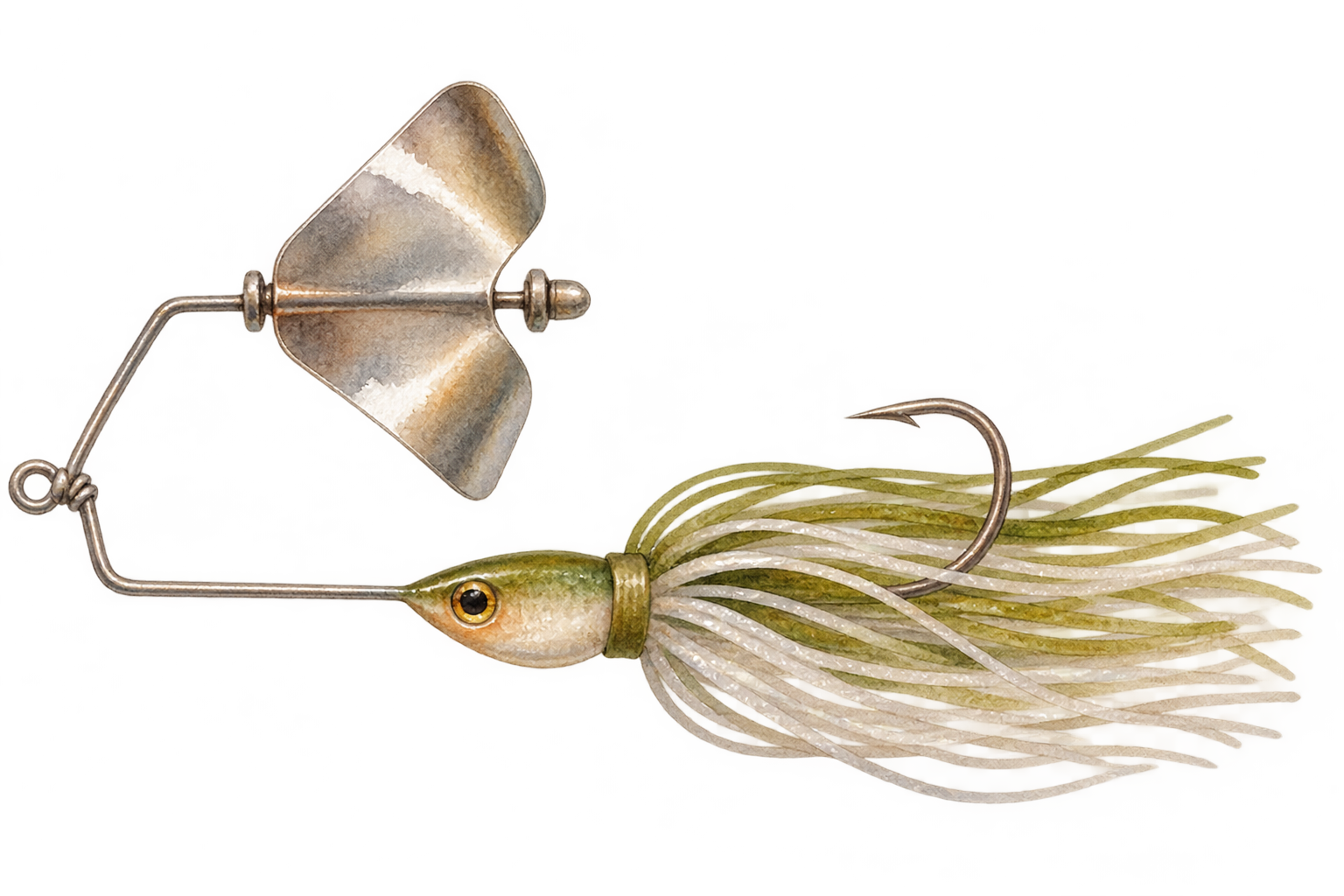
Buzzbaits
A wire-arm blade churns the surface during retrieve; most models sink when stopped.
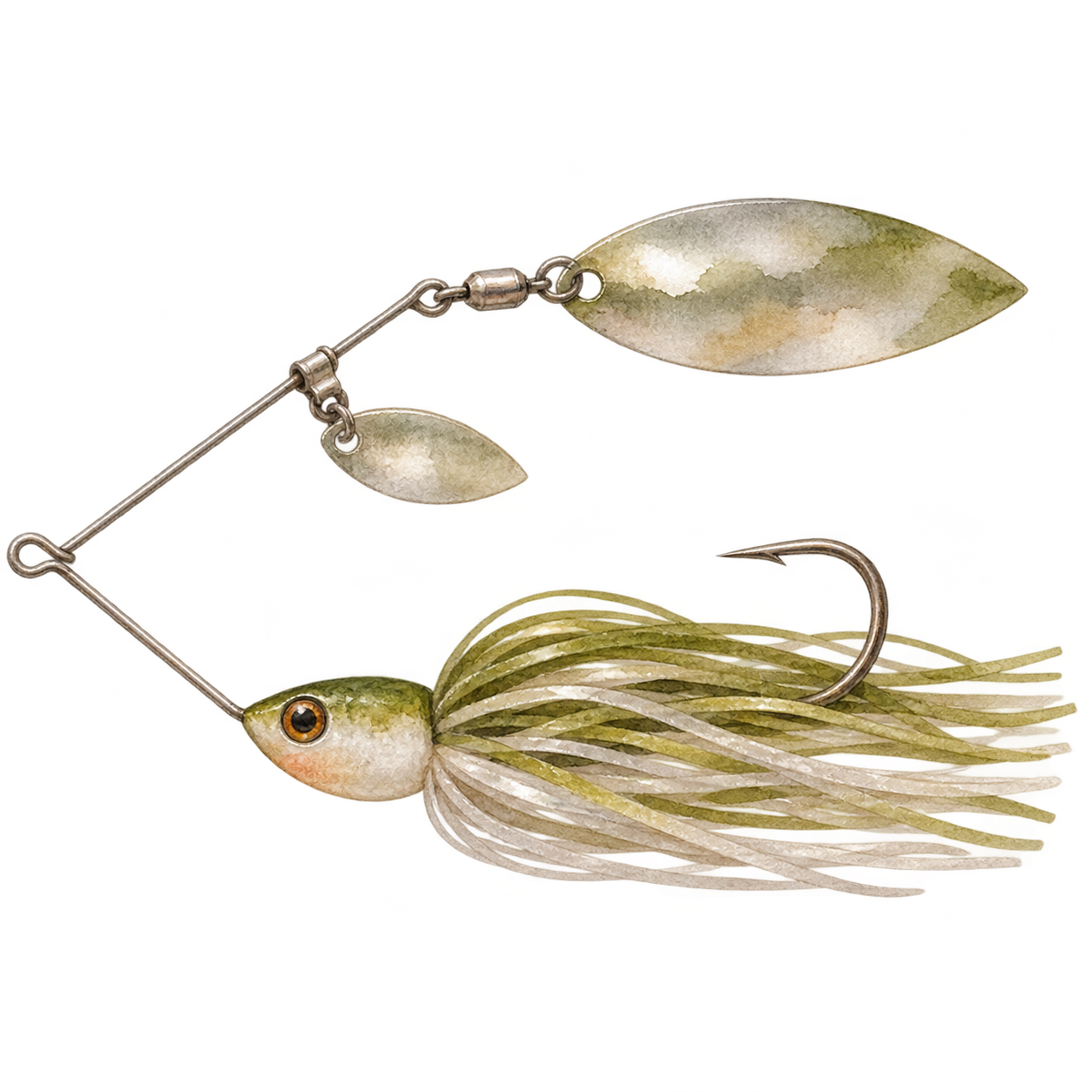
Spinnerbait
A wire arm separates rotating blades from a skirted hook head, combining flash and vibration.
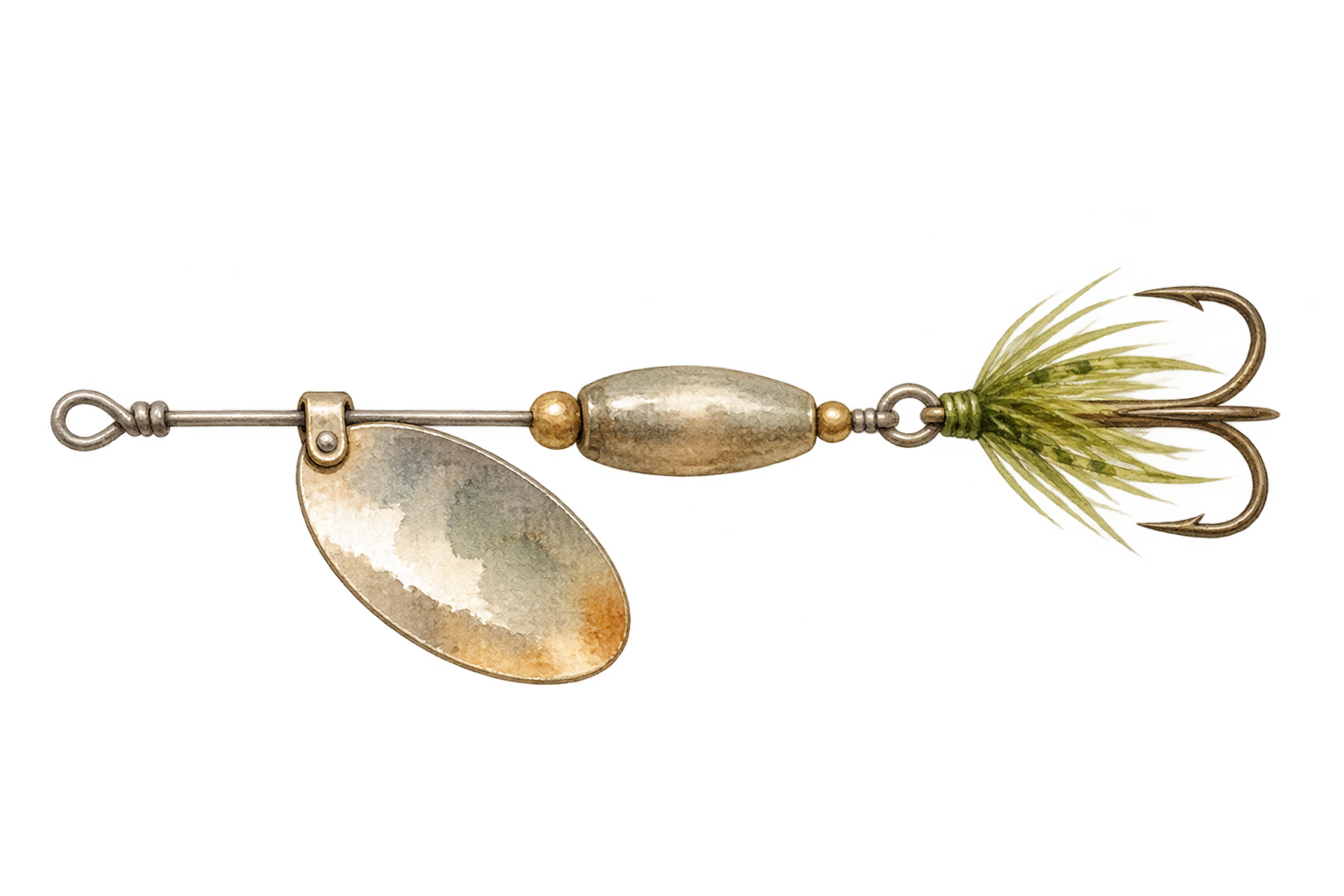
Inline Spinners
A blade rotates around a central shaft; useful in streams and open water with widely varying model weights.
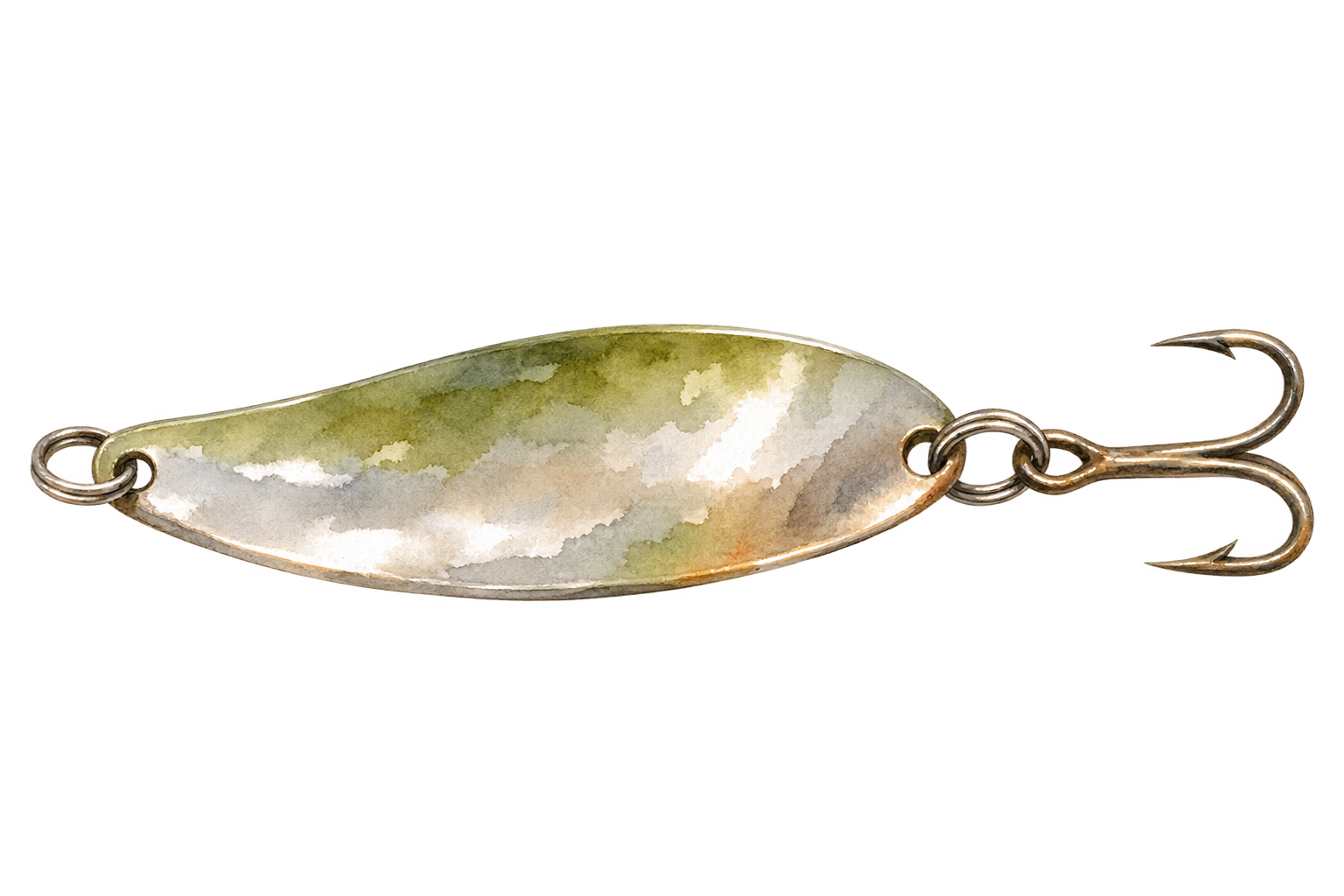
Spoon-shaped lure
Curved metal flashes and wobbles on retrieve and fall; casting, trolling and vertical models work differently.
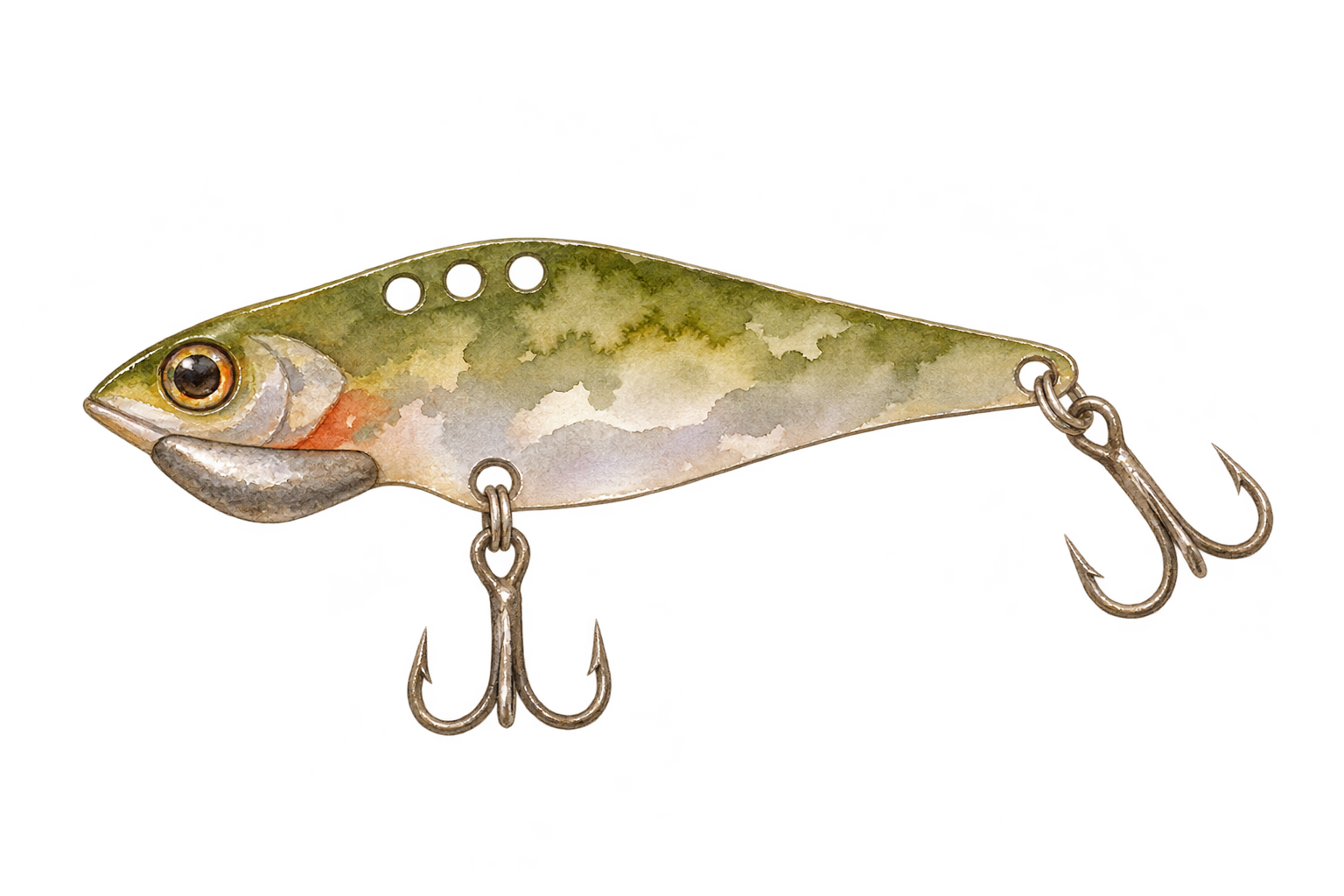
Blade Baits
A thin weighted metal blade vibrates on the lift, distinct from elongated metal jigs and hard-bodied lipless cranks.
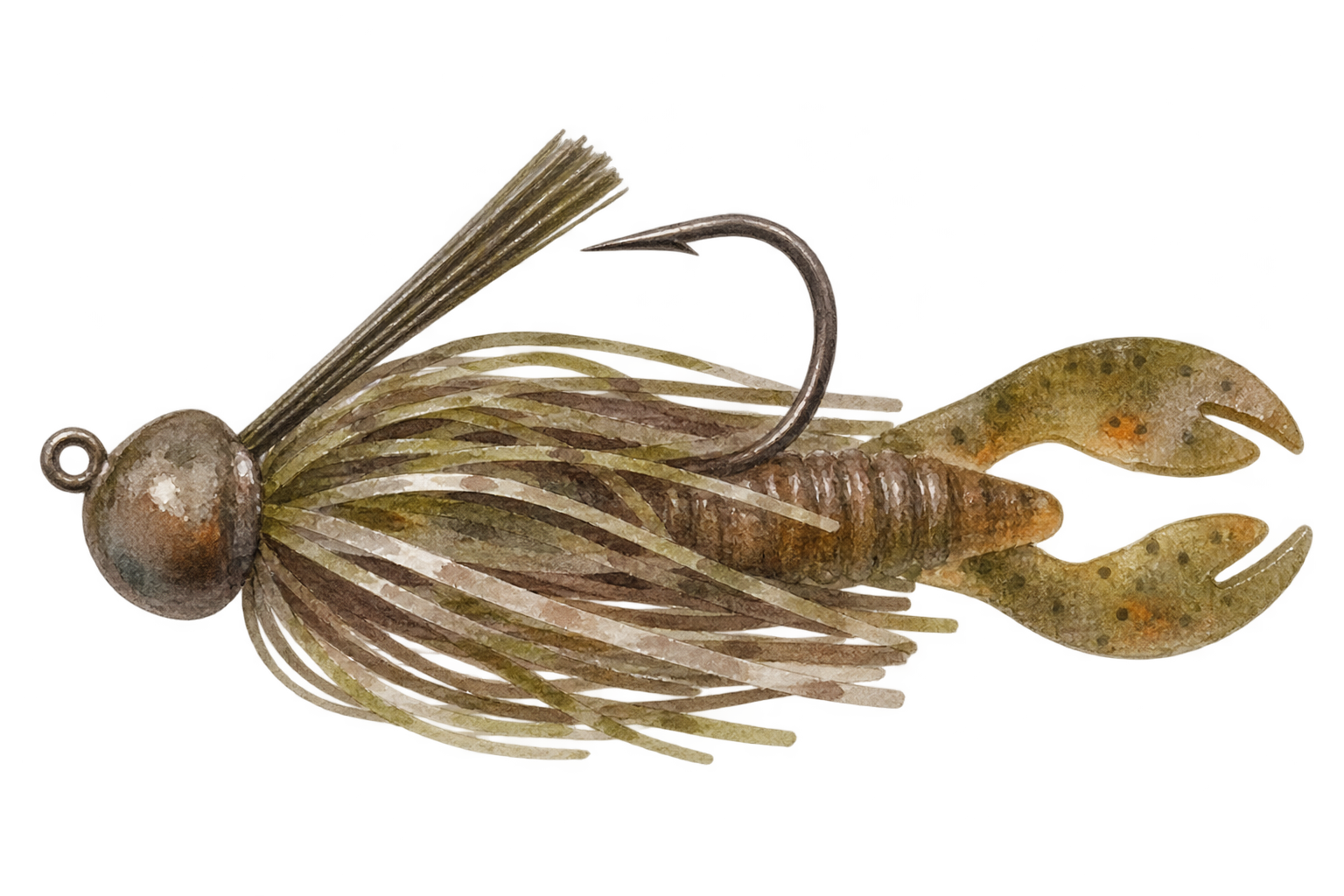
Skirted Bottom Jigs
A weighted hook, skirt and trailer for bottom presentations; this entry does not represent every jig.
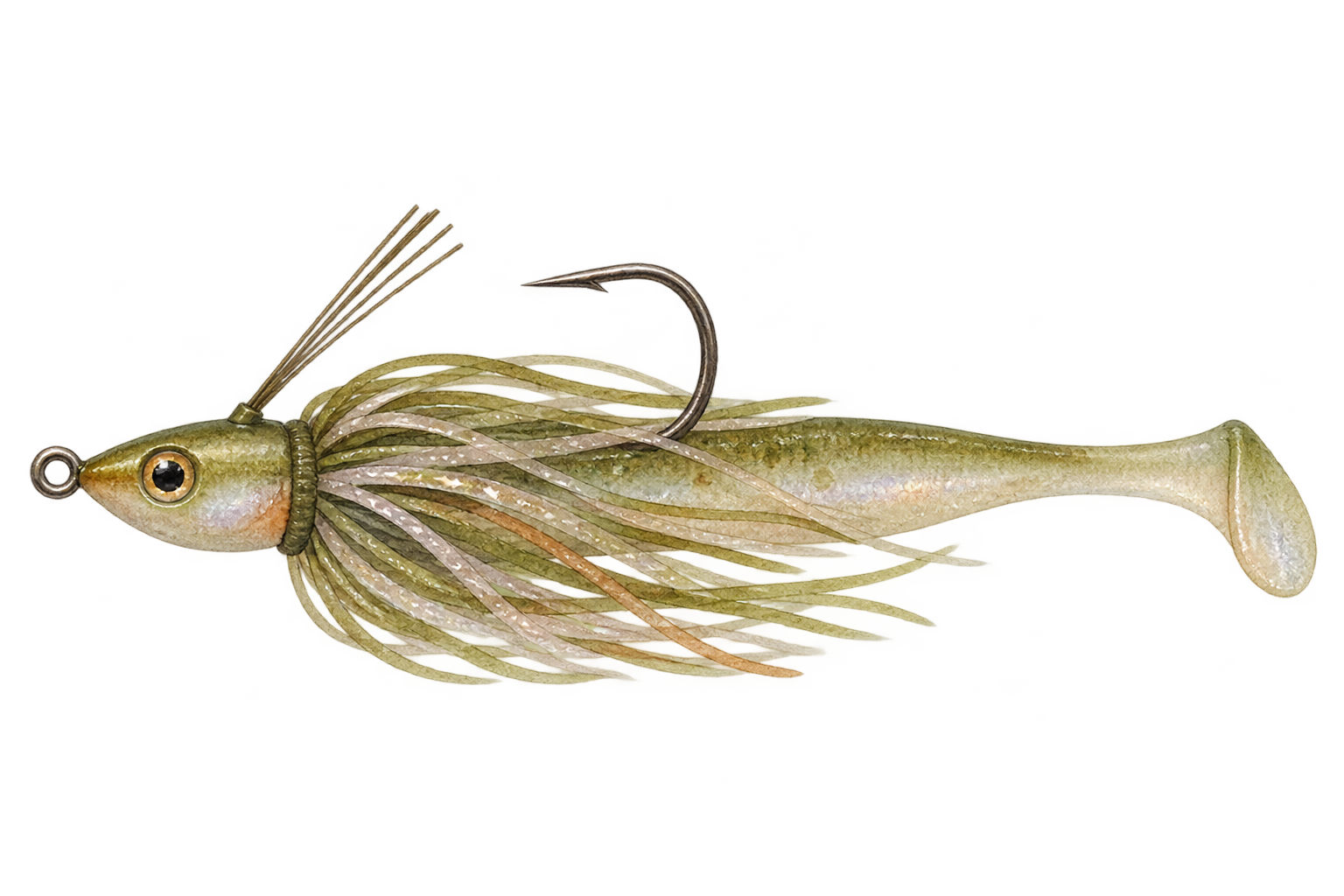
Swim Jigs
Skirted jigs designed primarily for swimming retrieves, often with paddletail or craw trailers.
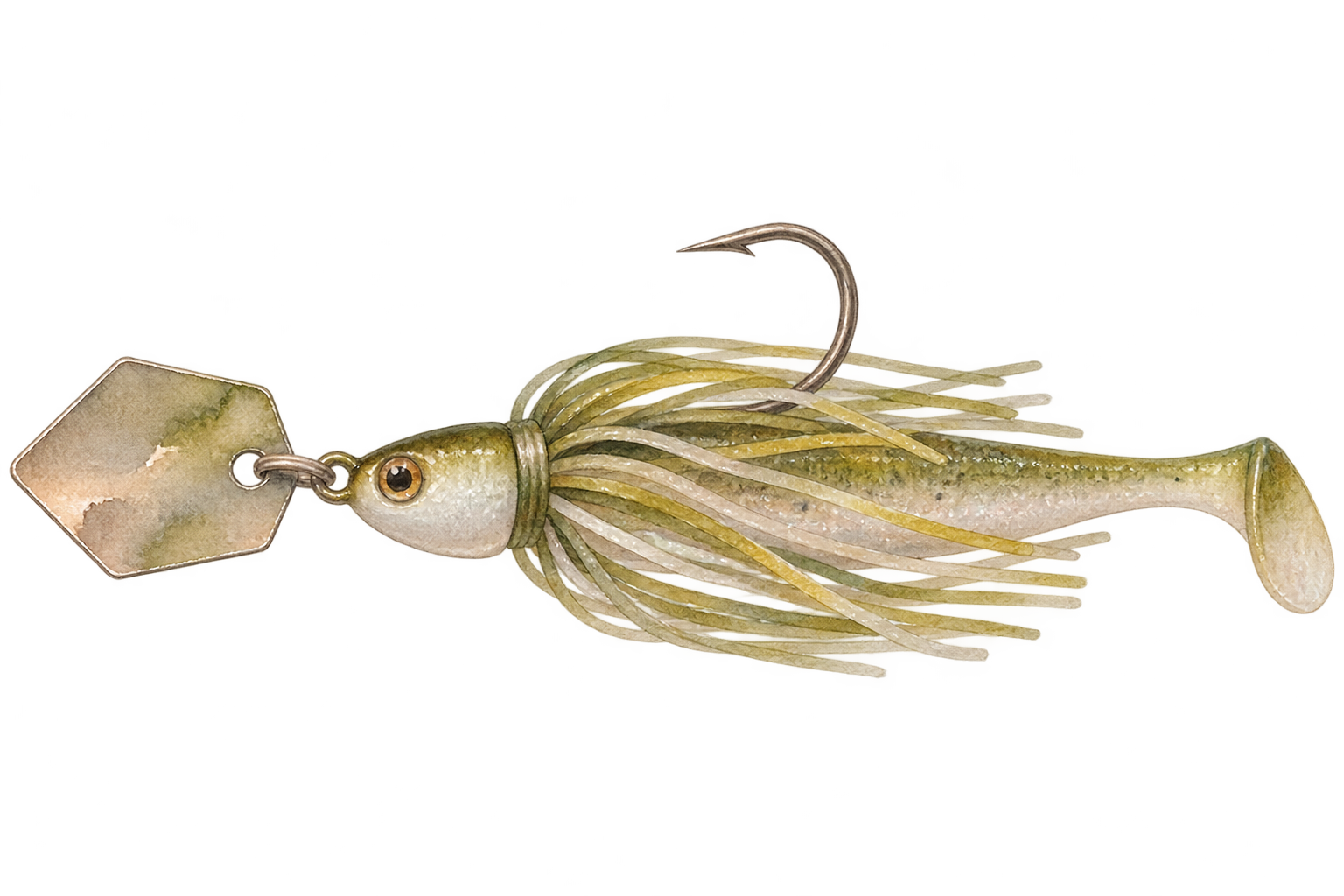
Bladed Jigs / ChatterBaits
A front blade creates vibration while a skirt and soft trailer form a baitfish profile. ChatterBait is a brand name.
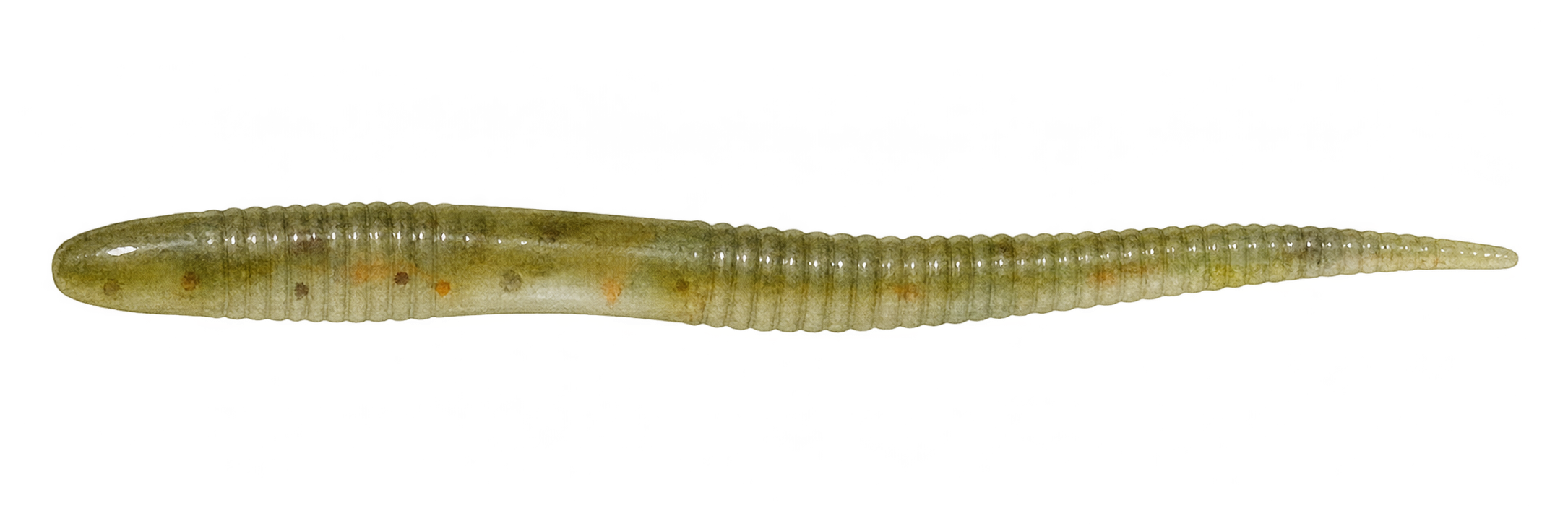
Worms / Stickbaits
Slender worms and stickbaits presented with slow falls, shakes and drags; the rig defines depth and action.
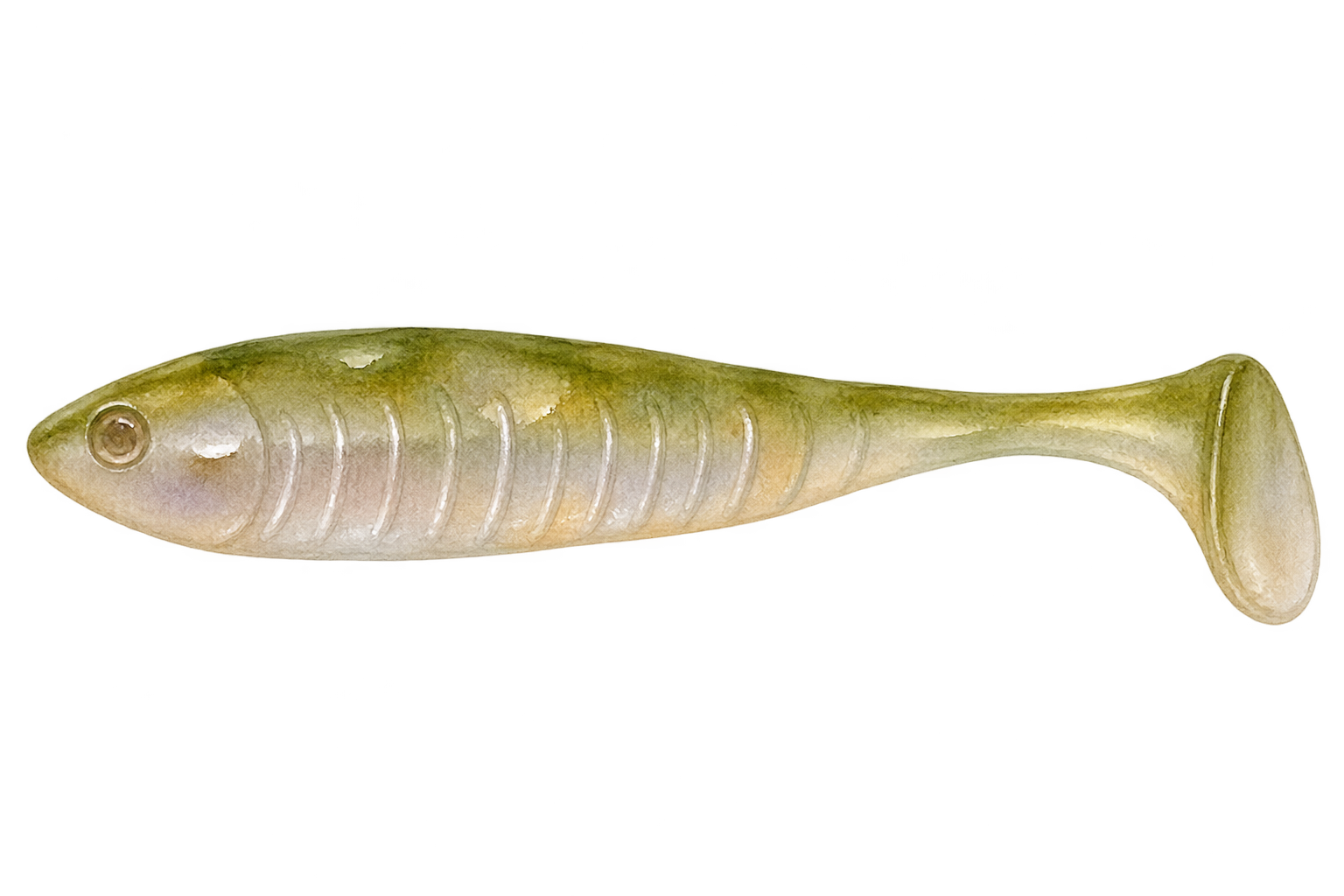
Paddletails / Grubs
Paddle or curly tails move during retrieve and can be used on jigheads, offset hooks or as trailers.
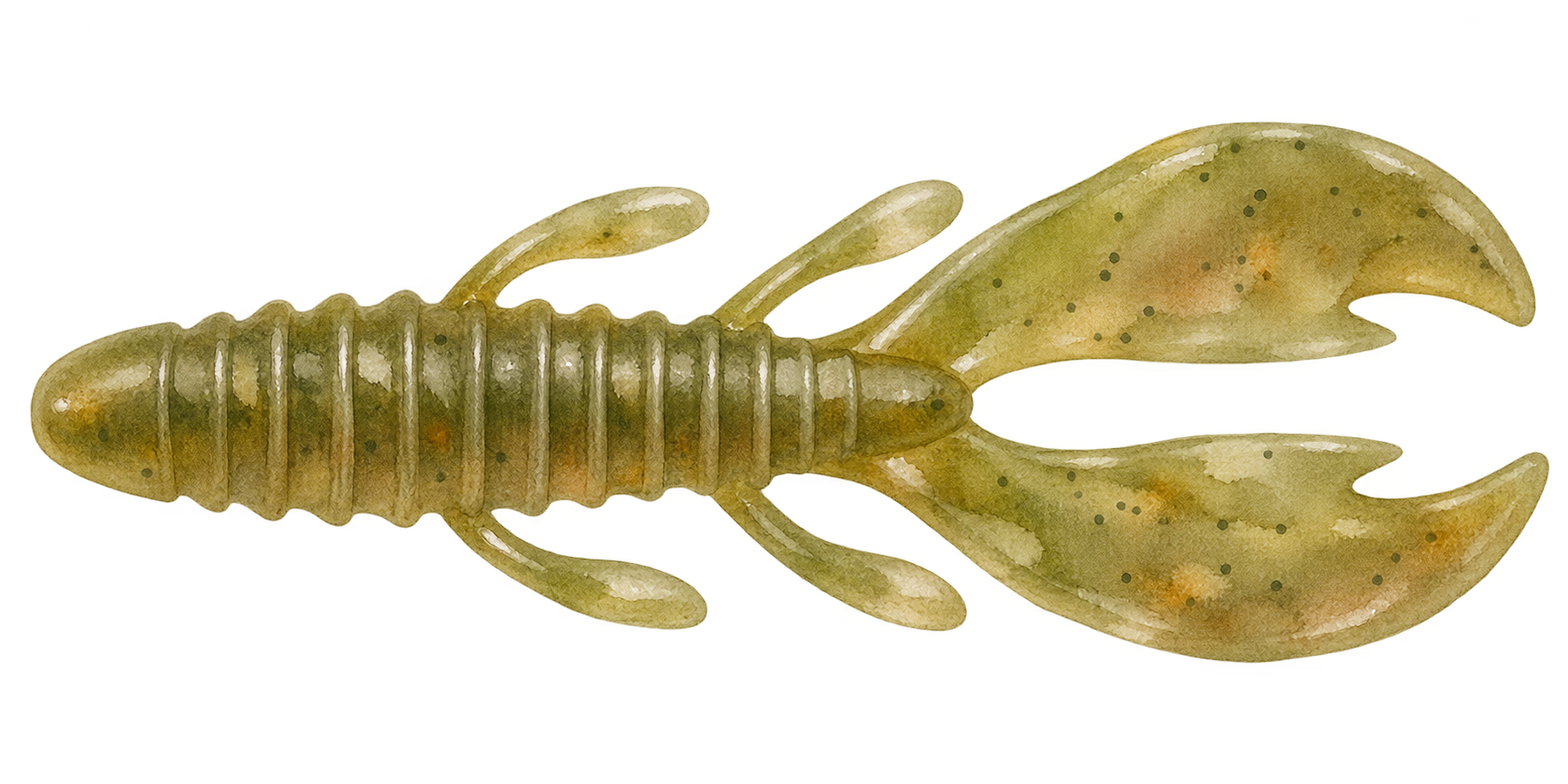
Craws / Creature Baits
Soft baits with claws or appendages for Texas/free rigs or jig trailers.
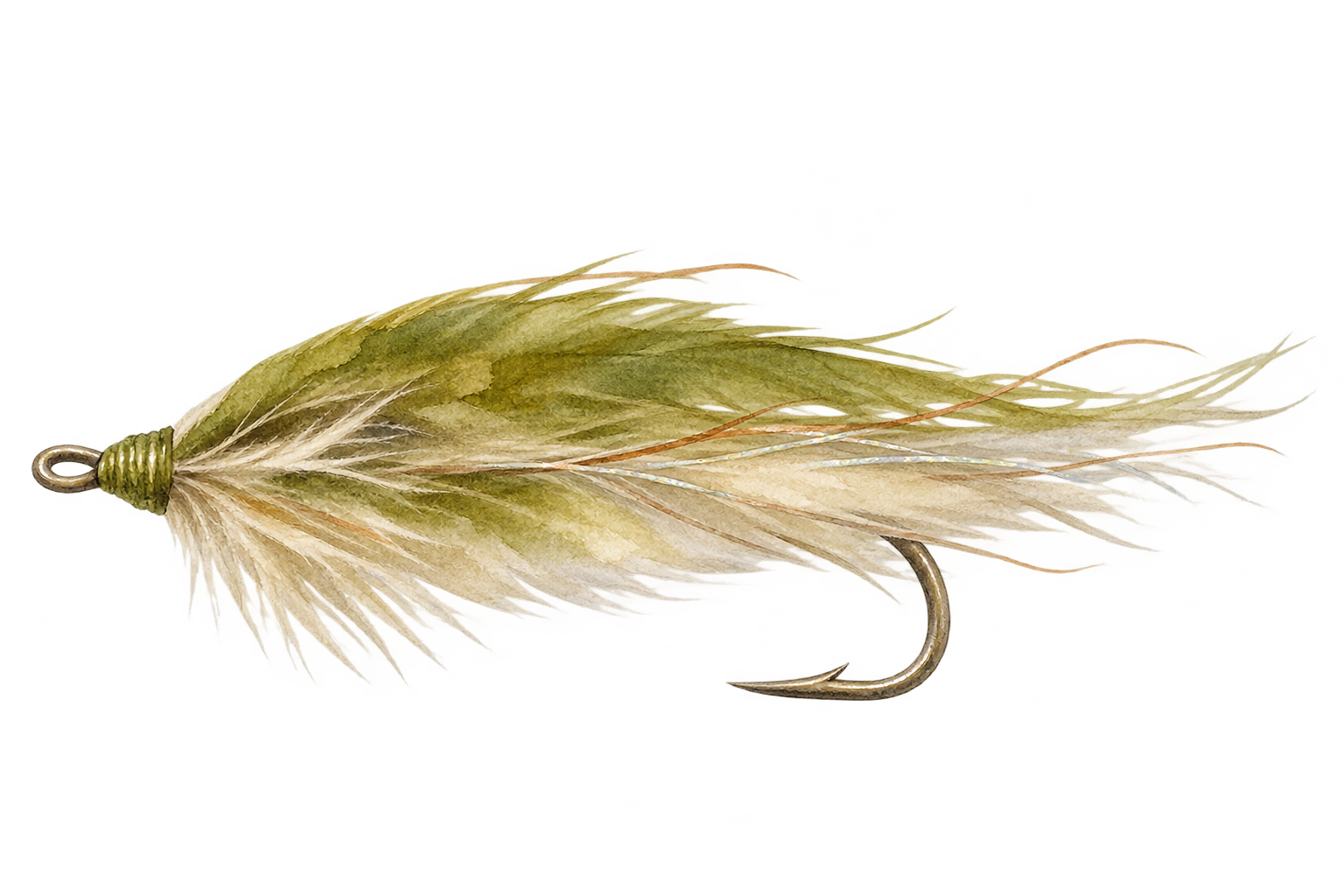
Artificial Flies
Imitations tied from feathers, hair or synthetics; dry flies, nymphs and streamers require distinct presentations.