Lure catalog / Lipless Crankbaits
L.03Lipless Crankbaits
Lipless Crankbaits
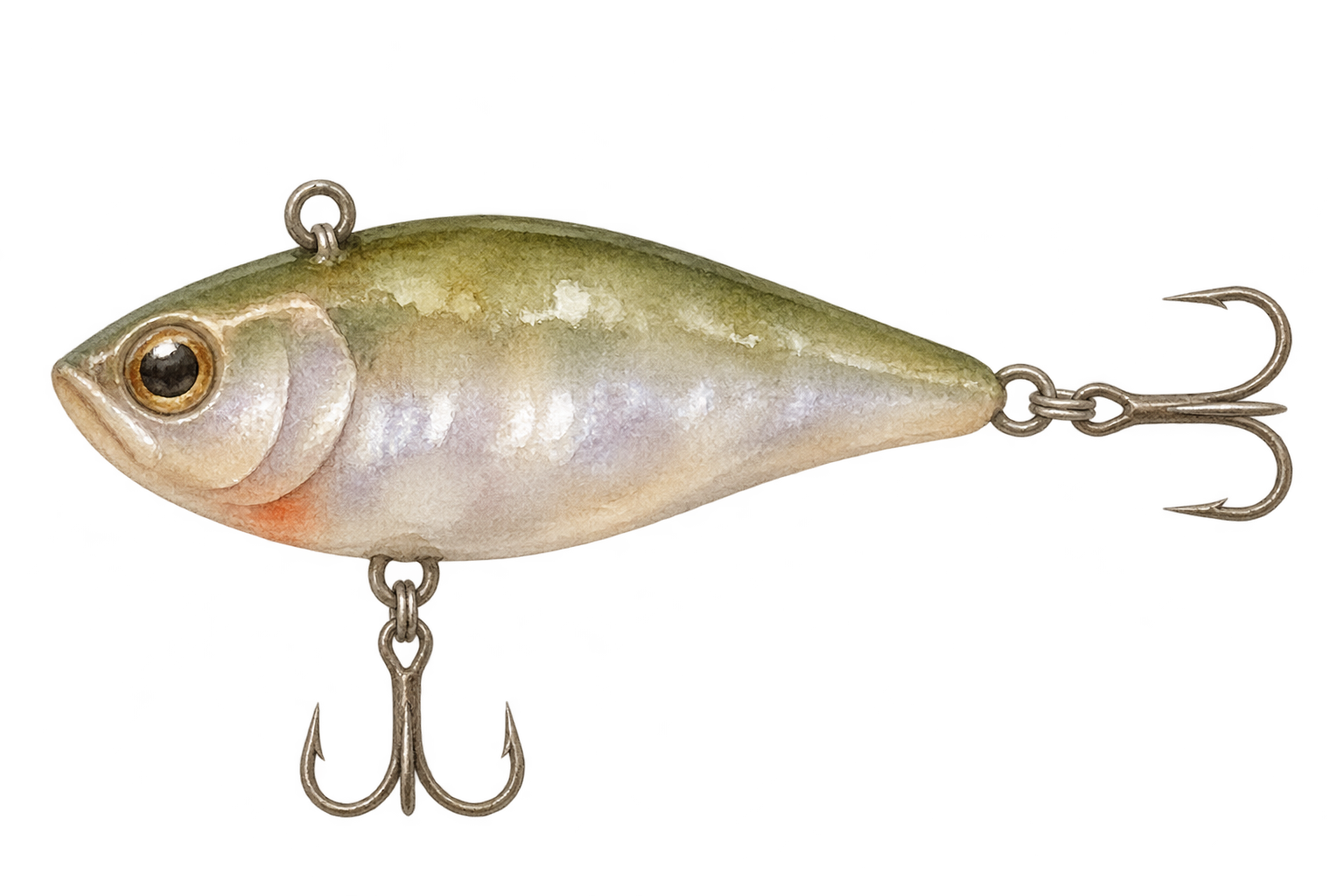
Flat-sided hardbaits with a back line tie and a tight vibration, distinct from thin metal blade baits.
Shape and identification
PRESENTATION
- Buoyancy
- Usually sinking; suspending variants also exist
- Working layer
- Control sinking models with sink time and retrieve speed rather than a universal running depth.
- Example size
- 40–90 mm
- Example weight
- 5–28 g
- Tackle notes
- Match tackle to weight and resistance; retrieve fast enough to feel the lure work.
01Use & Limits
Use and limits
When & Where
Open water, above weed tops and depth transitions when distance matters.
Limits and common errors
Exposed trebles snag bottom; ripping above grass is not fishing through thick mats.
02Retrieve
Retrieve steps
- Start shallow and note the sink time of a sinking model.
- Search with a steady retrieve or a controlled lift and fall.
- Watch for line changes on the fall and avoid leaving the lure on bottom.
AMotion & Structure
Motion and structure
Structure illustration
Action Demo
- With the line tie on the back, water hits the flat forehead and creates a fast, tight side-to-side vibration that you can clearly feel in the rod tip.
- Rattles inside knock against the body cavity and make noise, especially effective in muddy water and chop; silent versions exist for clear and heavily pressured water.
- A compact body with concentrated weight casts far and sinks fast.
| Type | Notes |
|---|---|
| Plastic VIB | The most common type, in rattling and silent versions. |
| Metal VIB | Made from a thin metal plate: smaller and heavier, it casts farther and sinks faster with a sharper vibration. Popular for topmouth culter, sea bass and winter bottom hopping. |
BTackle & Technique
Tackle and technique
- Rod
- M–MH, fast or moderate-fast, 6'10"–7'6"
- Reel
- Spinning or baitcaster both work
- Line
- PE #0.8–1.5 + fluoro leader 10–16 lb
- Count down: after splashdown, count “1, 2, 3…” before reeling. Remember which count gets bites and you can lock in the depth.
- Steady retrieve: medium to fast, keeping a constant vibration in the rod tip.
- Lift & fall: once on the bottom, lift the rod to pull the bait up, then lower it to let the bait fall. Bites often come on the fall.
- Keep slight tension on the line as it falls (tension fall) so you can feel bites on the fall.
- When it touches weeds, rip it free hard; that moment often triggers a strike.
- Reeling too fast makes it roll and lose its vibration; go by a steady vibration in the rod tip.
More application notes
- Open water, flat shallows, the tops of submerged weeds
- Long casts to culter and bass chasing schools of baitfish
- Muddy water and chop (sound and vibration)
- Hopping deep water in winter
- Wood, rock crevices and other snaggy structure; on the pause it sinks straight down and hangs up
04Targets
Target examples
Target links are starting points; match the model to fish size, depth and cover.
REFReferences
References and scope
- Take Me Fishing / RBFF · Lures and Retrieval Methods for Winter Bass Fishing ↗
Lipped, lipless and jerkbait differences, with cold-water retrieve examples.
- Take Me Fishing / RBFF · Freshwater Fishing Lures ↗
An introduction to hardbaits, plastics, spoons and rotating-blade lures.