Lure catalog / Spinnerbait
L.11Wire-Arm Spinnerbaits
Spinnerbait
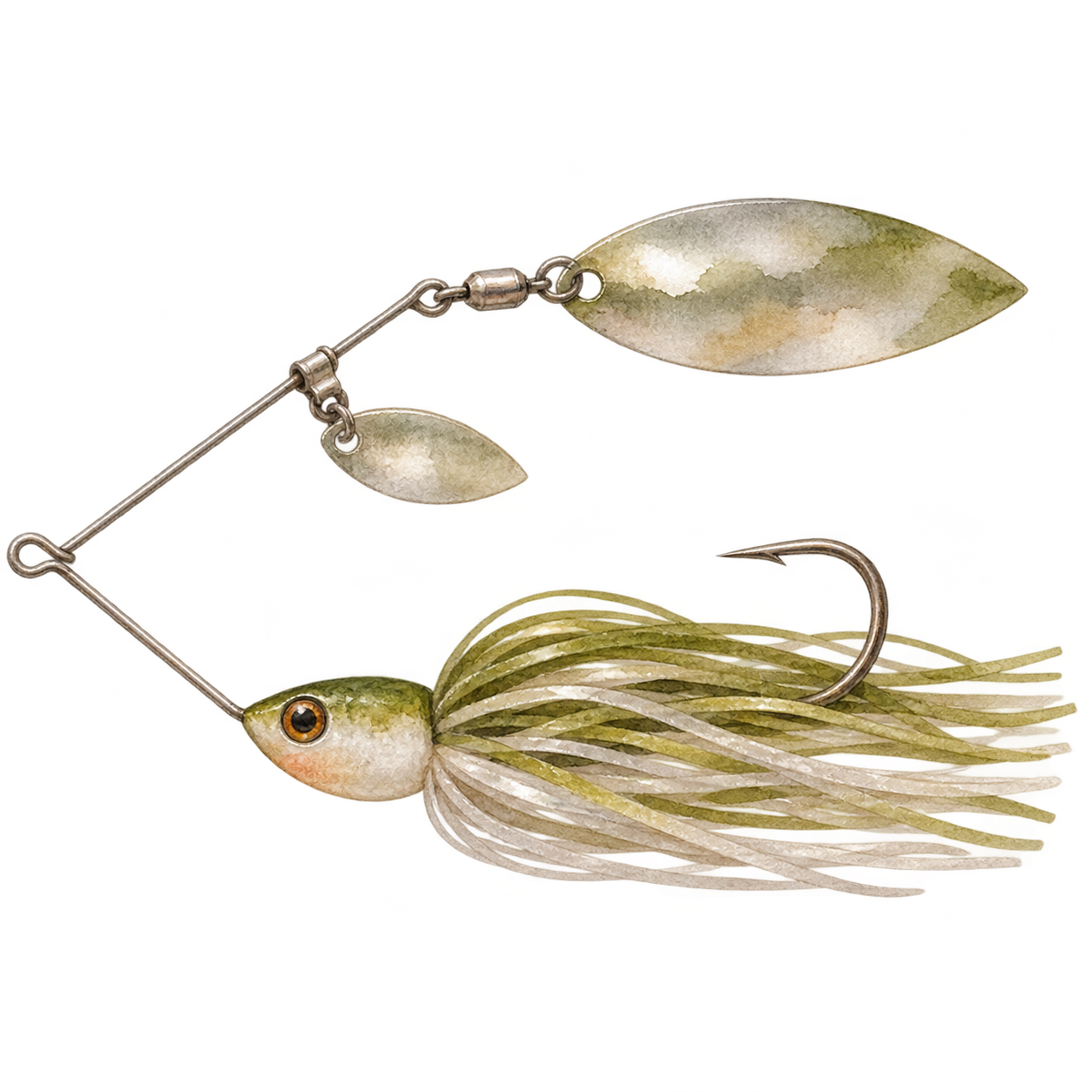
A wire arm separates rotating blades from a skirted hook head, combining flash and vibration.
Shape and identification
PRESENTATION
- Buoyancy
- Sinking
- Working layer
- Weight, sink time and retrieve speed set depth; slow rolling can reach deeper water.
- Example size
- Model-specific
- Example weight
- 7–21 g
- Tackle notes
- Match rod power to weight and blade resistance with enough power to drive the single hook.
01Use & Limits
Use and limits
When & Where
Grass edges, isolated wood, wind or stained water; adapt blade type and speed.
Limits and common errors
The frame offers some protection, but weed clumps and branches can still foul it.
02Retrieve
Retrieve steps
- Check that the blades start at a low retrieve speed.
- Retrieve along the grass edge or sink first and slow-roll the chosen layer.
- Control speed around isolated cover rather than pulling into dense branches.
AMotion & Structure
Motion and structure
Structure illustration
Action Demo
- The spinning blades give flash and vibration, and the skirt flares and pulses in the water, creating a big, visible profile.
- The wire arm hits cover first and bounces the bait off, and the single hook rides point-up, so it rarely snags.
- The blades define its character: more thump suits slow retrieves and muddy water; more flash suits fast retrieves and clear water.
| Type | Notes |
|---|---|
| Willow | Long and slim, lots of flash and little drag; suits faster retrieves, clear water and weeds. |
| Colorado | Round, with strong thump and lots of lift; suits slow retrieves, muddy water and night fishing. |
| Indiana | Oval, somewhere in between. |
BTackle & Technique
Tackle and technique
- Rod
- MH, moderate-fast or fast, 6'10"–7'2"
- Reel
- Baitcaster, medium to high gear ratio
- Line
- Fluoro 12–20 lb
- Steady retrieve: run it past wood, weed edges and rocks, deliberately bumping into cover.
- Slow roll: reel just fast enough for the blades to turn, rolling it slowly along the bottom; good in cold water and somewhat deeper water.
- Burn: reel fast just under the surface, even making the surface bulge.
- When fish are short-striking, add a trailer hook behind the main hook.
- Wind-blown banks are often the best spots.
More application notes
- Muddy water, overcast, windy
- Cover such as wood, weed edges and docks
- Searching in spring and fall
- Very clear, heavily pressured water (usually less effective than finesse techniques)
04Targets
Target examples
Target links are starting points; match the model to fish size, depth and cover.
REFReferences
References and scope
- Vermont Fish & Wildlife · Spinner Baits ↗
Inline, wire-arm and tail-spinner structures, retrieves and weighting.