Craws / Creature Baits
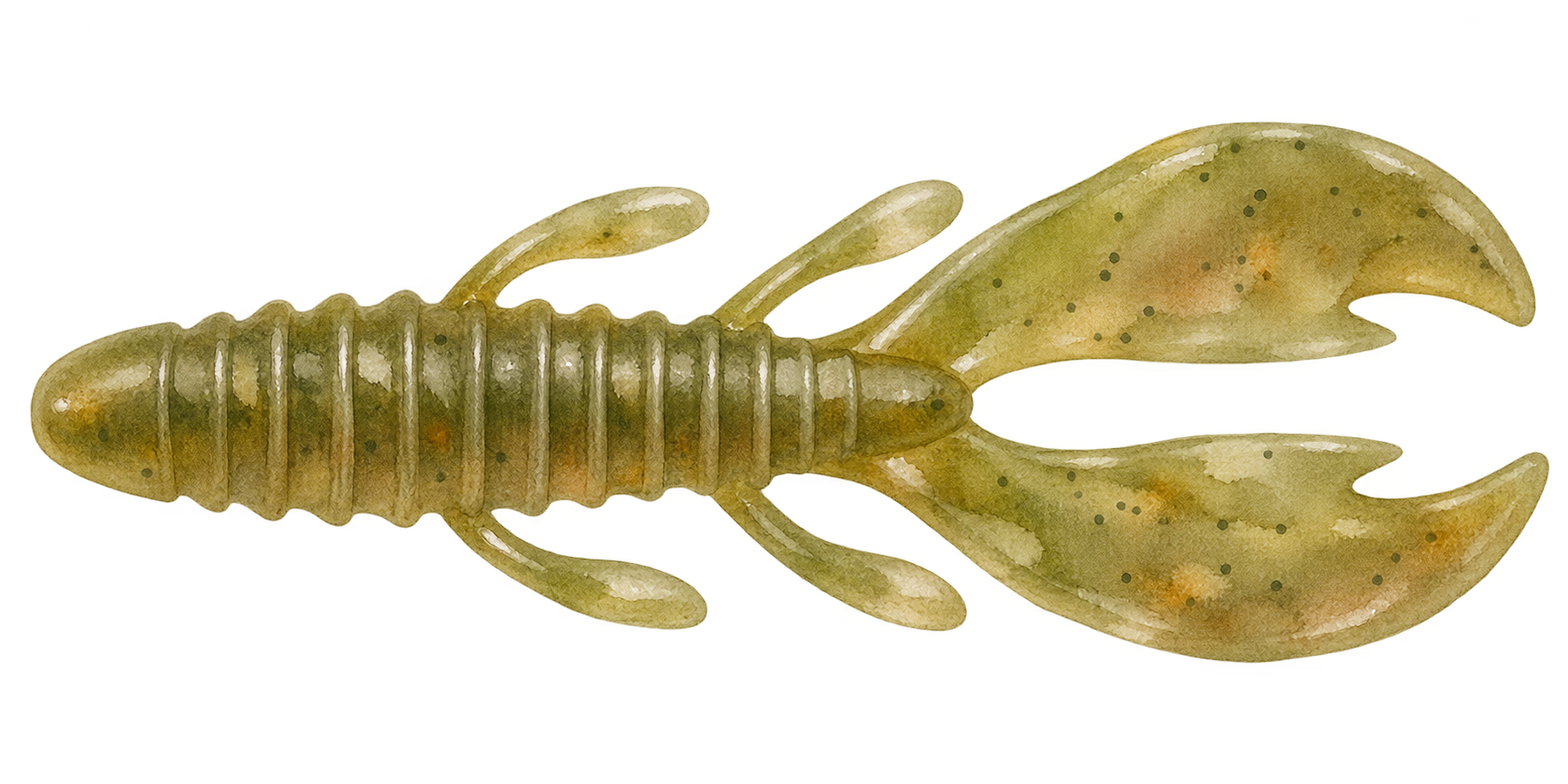
- Buoyancy
- Sinking or buoyant, depending on material
- Working layer
- Often worked near bottom; a claws-up stance depends on material, hook and weight.
- Example size
- 50–100 mm
- Example weight
- Added weight 3–14 g
- Tackle notes
- Leave enough offset-hook gap for the point to emerge when the body compresses.
Use and limits
When & Where
Bottom structure, grass pockets and slow presentations through manageable cover.
Limits and common errors
Small fish can tear appendages; protected hooks still lodge in crevices.
Retrieve steps
- Choose a Texas or free rig and check point protection and hook gap.
- Let it reach the target and hop or drag along cover edges.
- Pause to let appendages settle, then recover line and set when weight is felt.
Rigging options
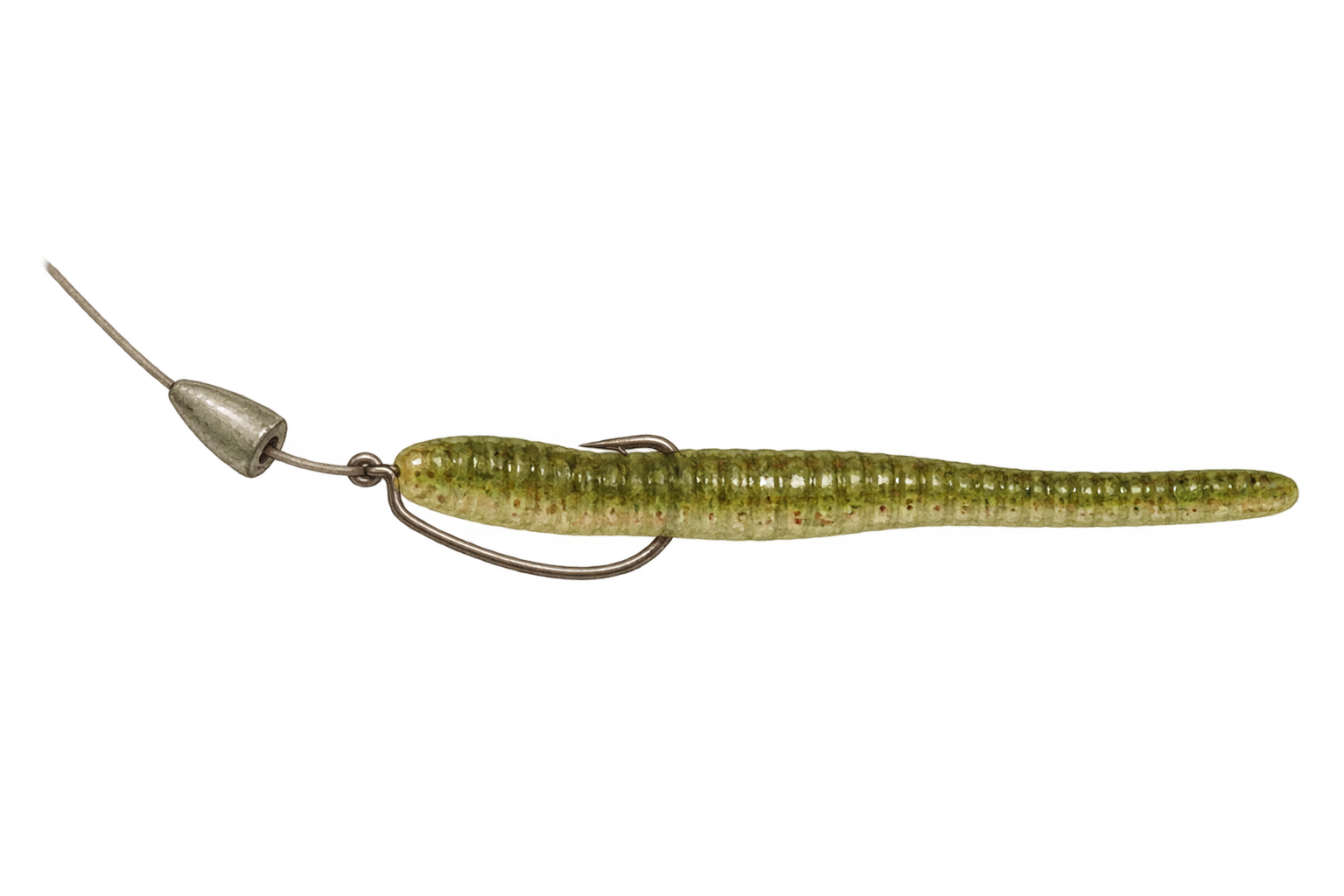
Texas rig
A bullet weight and offset hook with a protected point to reduce fouling.
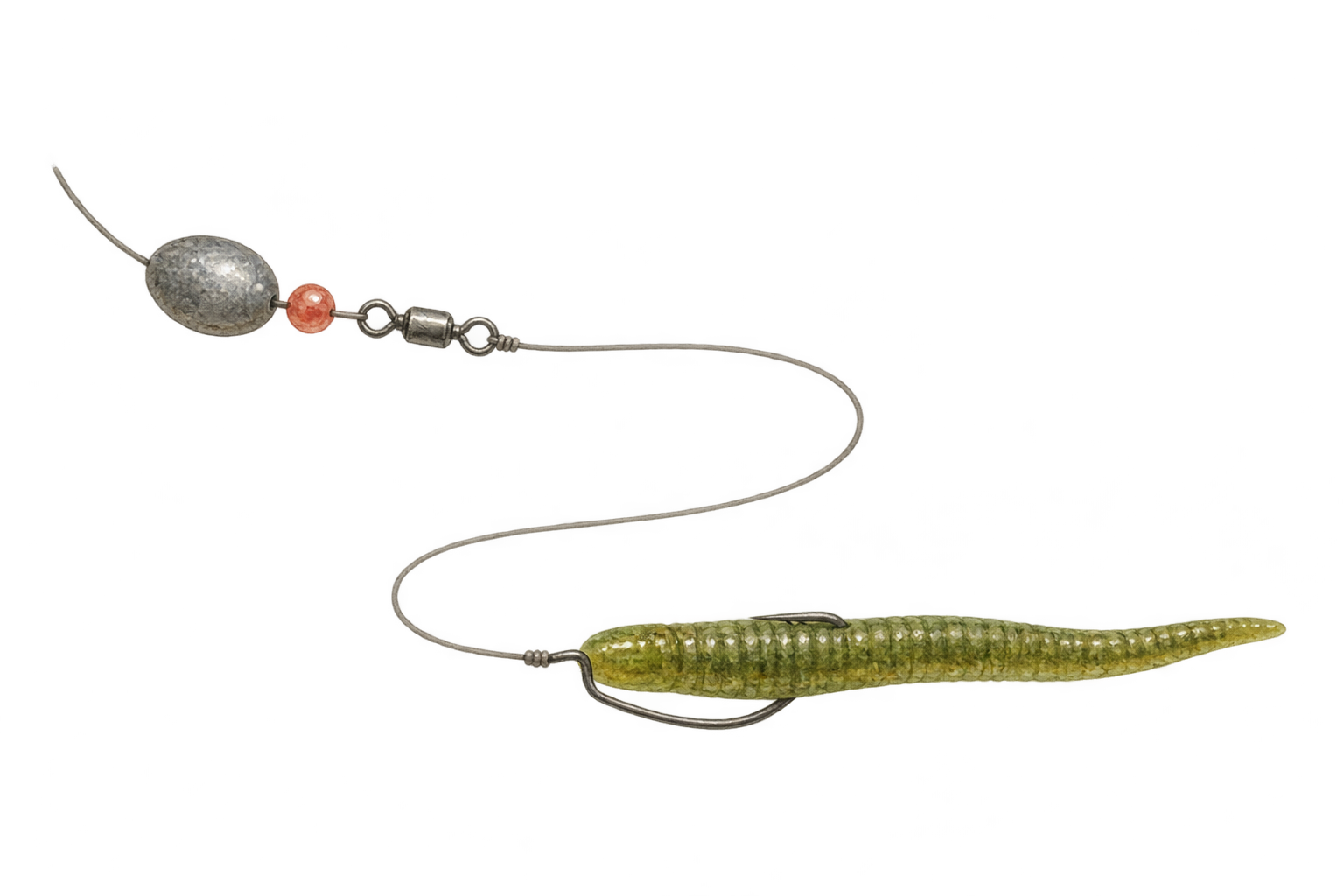
Carolina Rig
A forward weight and a swivel-linked leader separate bottom contact from the softbait.
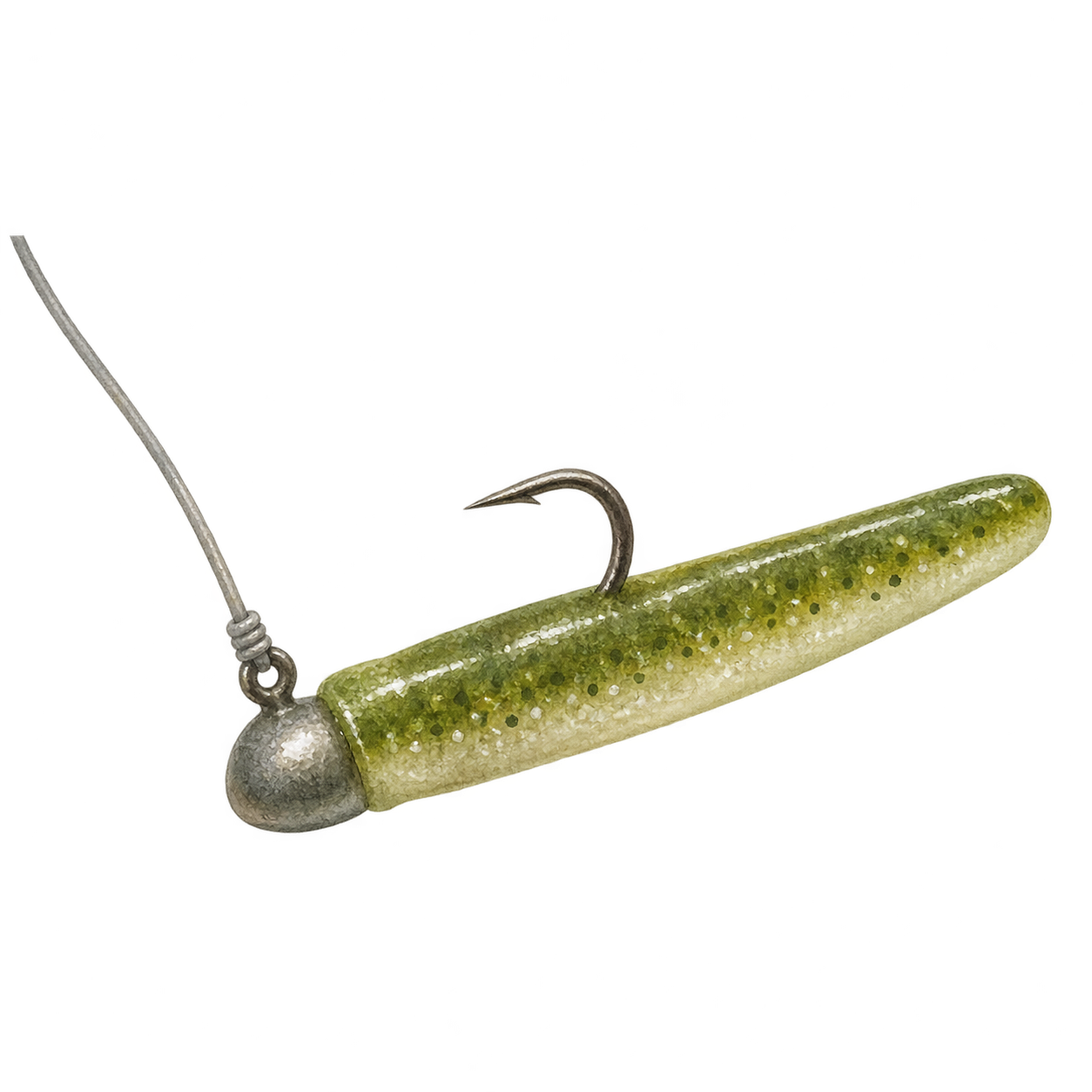
Ned Rig
A small mushroom head and short plastic for a compact presentation; standing up requires suitable buoyancy.
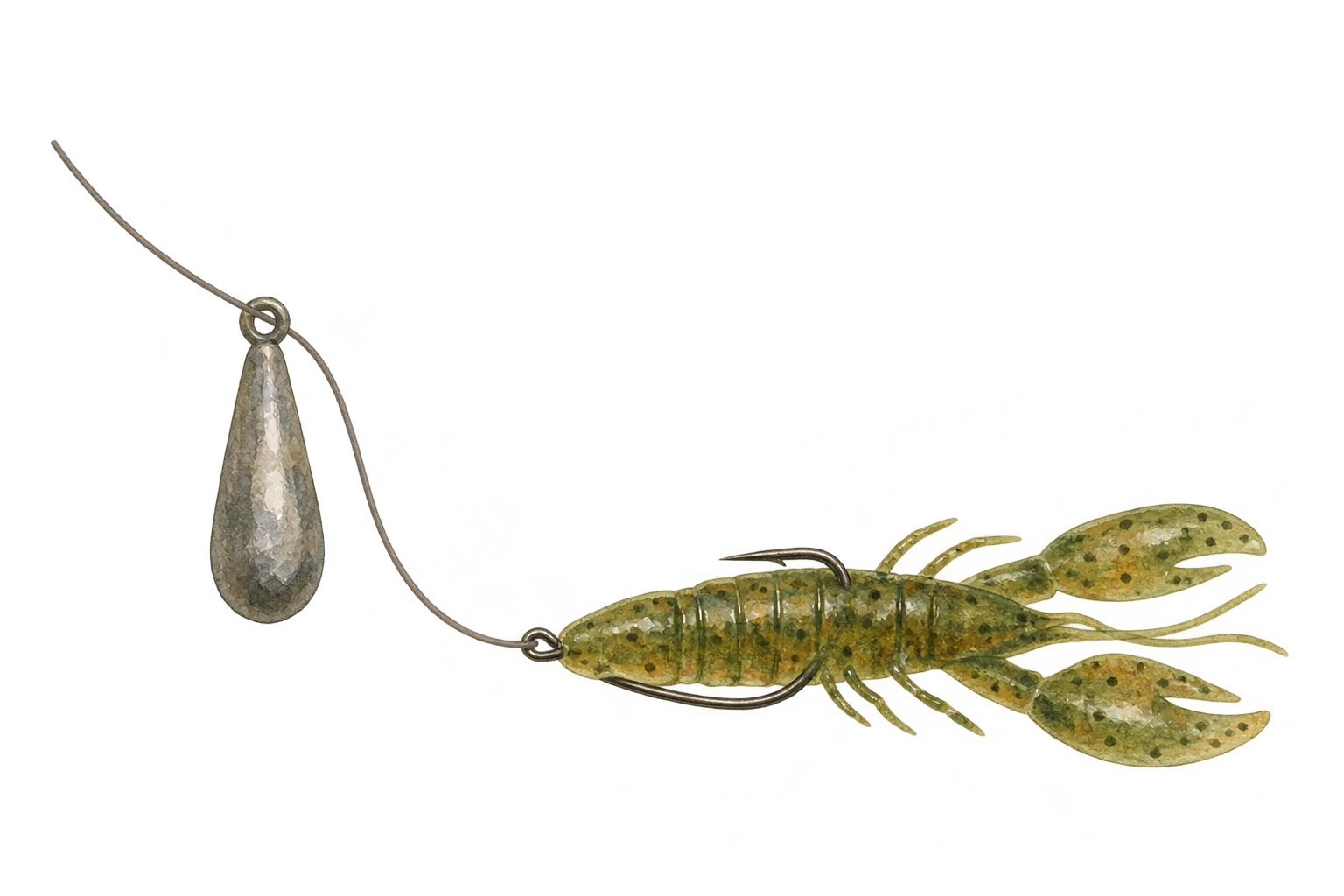
Free Rig
Line slides through an eyed weight before the hook, allowing separation during the fall.
Target examples
Target links are starting points; match the model to fish size, depth and cover.
References and scope
- Vermont Fish & Wildlife · Texas Rig ↗
Bullet weights, plastics and protected hook points; adapting weight to depth and cover.
- Vermont Fish & Wildlife · Jigs ↗
Skirted, hair and soft-plastic jigs; jig fishing is not limited to vertical hopping.