Lure catalog / Popper
L.06Poppers
Popper
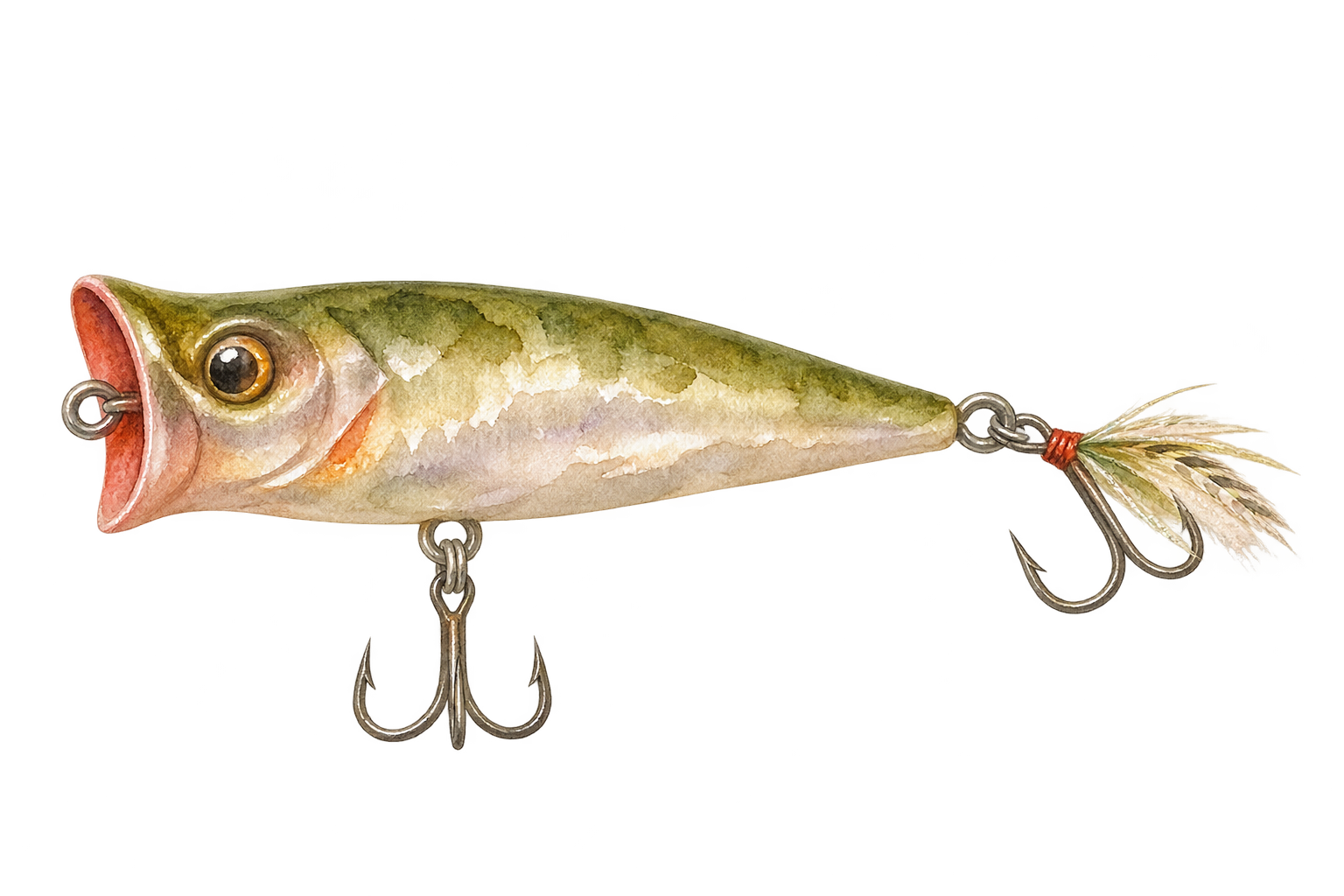
A cupped mouth pushes water to produce surface disturbance, unlike a frog or wire-frame buzzbait.
Shape and identification
PRESENTATION
- Buoyancy
- Floating; this entry covers surface poppers
- Working layer
- Surface, with localized disturbance from short pulls.
- Example size
- 40–100 mm
- Example weight
- 3–30 g
- Tackle notes
- Use line suited to surface presentations and avoid hardware that pulls the nose down.
01Use & Limits
Use and limits
When & Where
Open shallows, clear pockets beside grass and low-light feeding activity.
Limits and common errors
Exposed hooks are unsuitable for thick surface mats; do not strike at the first splash.
02Retrieve
Retrieve steps
- Cast to the edge of the target and let the lure settle.
- Make one or two short pops, then pause.
- Sweep and retrieve after the fish takes the lure and weight is felt.
AMotion & Structure
Motion and structure
Structure illustration
Action Demo
- The cupped mouth catches water when pulled, making bubbles, spray and sound (pop / splash).
- Small snaps make noise with the bait staying almost in place; bigger snaps push it forward with a bigger splash.
- Often has a feather or silicone tail that quivers in the ripples on the pause.
BTackle & Technique
Tackle and technique
- Rod
- ML–M, fast or moderate-fast
- Reel
- Spinning or baitcaster
- Line
- Mono or braid (floats)
- Snap–pause: one short downward snap, then pause 1–3 seconds; when fish aren't aggressive, pause longer, until the ripples are gone.
- Rapid continuous pops: mimics a panicked, fleeing baitfish; use when fish are chasing bait.
- Again, wait until you feel weight before setting the hook.
- Pause length is the most important variable; experiment with different lengths.
More application notes
- Dawn, dusk, overcast
- Shallows, weed edges, around wood and docks
- When schools of fish are chasing baitfish on the surface
- Strong wind and waves
04Targets
Target examples
Target links are starting points; match the model to fish size, depth and cover.
REFReferences
References and scope
- Vermont Fish & Wildlife · Poppers and Walking-Style Baits ↗
Popper and walking-bait actions and handling surface strikes.