Lure catalog / Metal Jigs
L.15Metal Jigs
Metal Jigs
Solid metal lures for casting or vertical jigging; shape and weight distribution affect action and fall.
Shape and identification
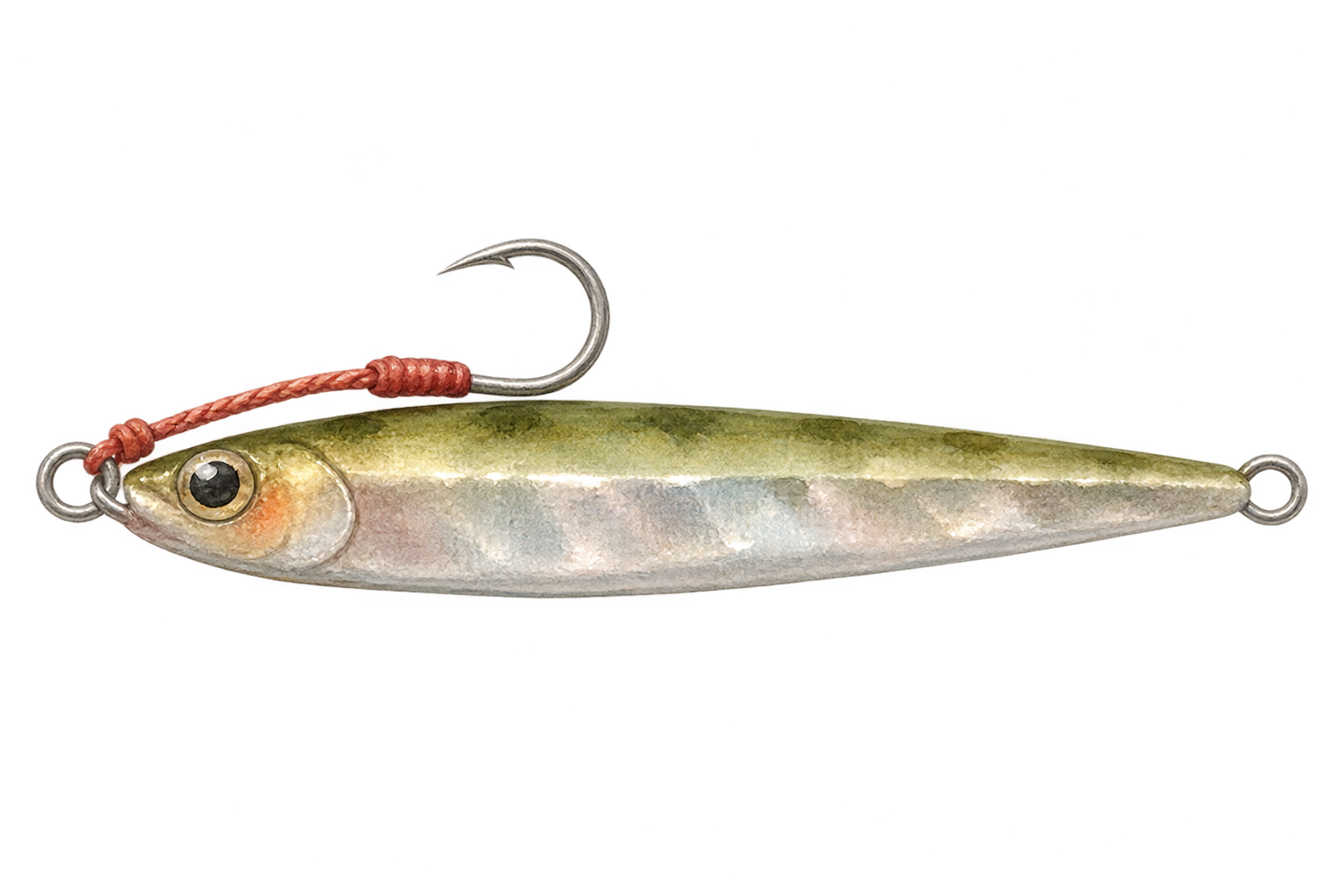
PRESENTATION
- Buoyancy
- Sinking
- Working layer
- Models cover shallow to deep water; the listed sizes are light shore-casting examples.
- Example size
- 30–90 mm
- Example weight
- 5–40 g
- Tackle notes
- Match tackle to weight, current and terrain; inspect assist-hook cord.
01Use & Limits
Use and limits
When & Where
Distant baitfish, drop-offs and open coastal water with current.
Limits and common errors
Light shore-jig weights do not apply to deep offshore jigging; takes also occur on the fall.
02Retrieve
Retrieve steps
- Read wind and current and choose a weight that maintains contact.
- Time the descent and alternate lifts with retrieve, or search steadily.
- Watch line speed on the fall and lift clear of bottom near shore.
AMotion & Structure
Motion and structure
Structure illustration
Action Demo
- Dense metal means a smaller, more aerodynamic body for the weight, so it casts the farthest of all.
- It has almost no built-in swimming action; all the movement comes from the rod tip and the reel. On the fall it flips side to side and flashes (fall action).
- Weight placement and shape together affect how it falls and how fast: slim jigs with a small cross-section sink fast; center-balanced, wide, flat jigs flip and flutter more on the fall. Rear-weighted jigs are also common for fast sinking and long casts.
BTackle & Technique
Tackle and technique
- Rod
- M–MH, fast, 7'6"–8'6" (long casts from shore)
- Reel
- Spinning 3000–4000
- Line
- PE #1.0–1.5 + fluoro leader 16–25 lb
- Lift & fall: after it hits bottom, lift the rod and reel, then drop the rod to let it fall, and repeat.
- Fast retrieve: when fish are chasing bait on the surface, reel it in fast and steady or jerk it at high speed.
- One pitch jerk: one turn of the handle per rod jerk, mainly for saltwater boat jigging; see the Saltwater chapter.
- Many bites come on the fall, so keep slight tension on the line as it drops.
- Metal jigs usually carry assist hooks at the head, which snag and foul less than a treble at the tail.
More application notes
- Schools of culter or yellowcheek blowing up far out
- Strong wind, or when you need maximum casting distance
- Deep water, strong current
- Shallow areas with cover
04Targets
Target examples
Target links are starting points; match the model to fish size, depth and cover.
REFReferences
References and scope
- Shimano · A Guide To Shore Jigging ↗
Shore-cast metal jigs, depth control and lift/fall retrieves.