Lure catalog / Blade Baits
L.14Blade Baits
Blade Baits
A thin weighted metal blade vibrates on the lift, distinct from elongated metal jigs and hard-bodied lipless cranks.
Shape and identification
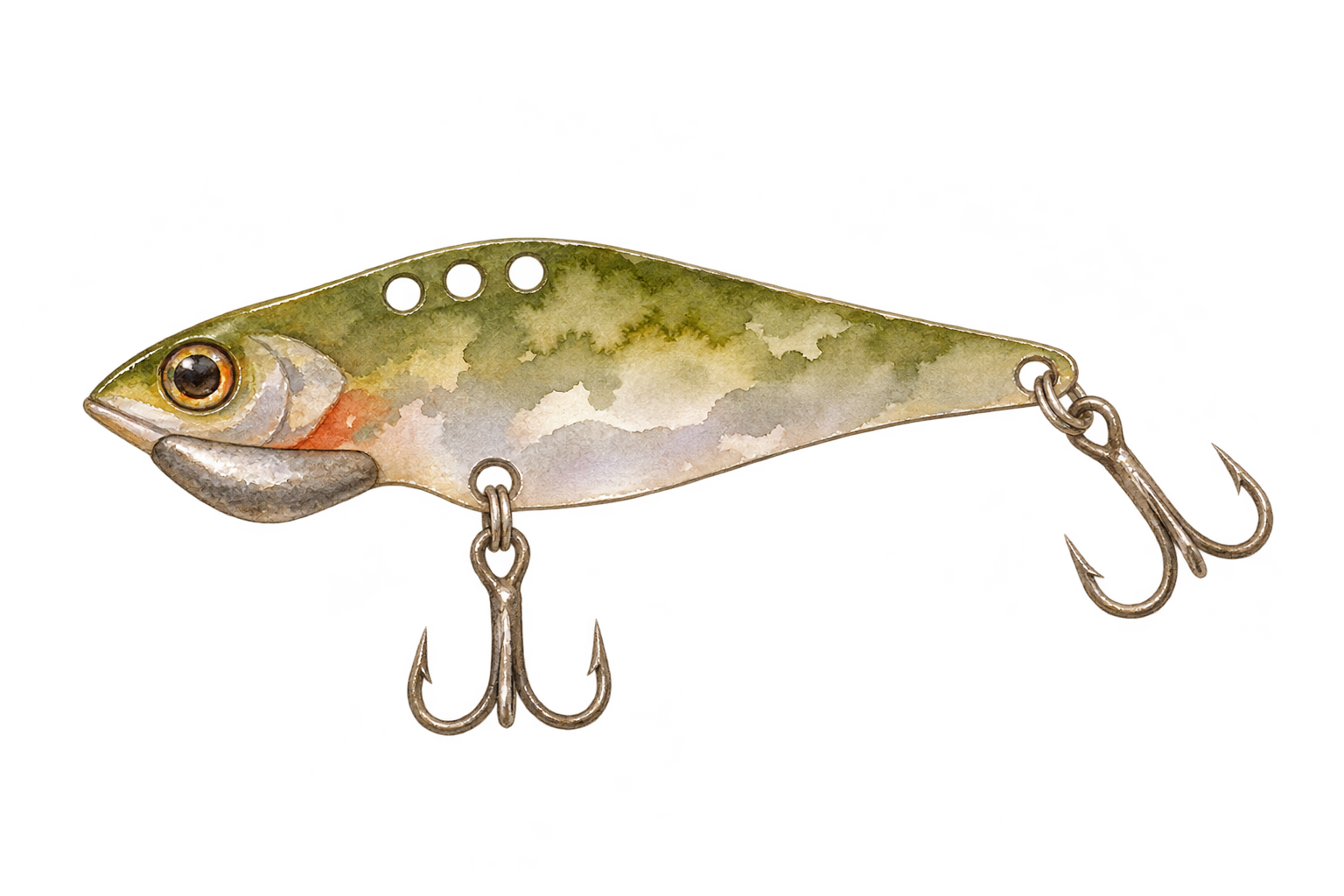
PRESENTATION
- Buoyancy
- Sinking
- Working layer
- Middle to bottom layers with lift/fall retrieves; depth depends on weight, current and line angle.
- Example size
- 35–70 mm
- Example weight
- 5–21 g
- Tackle notes
- Use tackle that transmits vibration and bottom contact, with the lightest effective weight.
01Use & Limits
Use and limits
When & Where
Relatively clean depth transitions, firm bottom and controlled cold-water searches.
Limits and common errors
Exposed hooks snag crevices; large violent lifts are unnecessary.
02Retrieve
Retrieve steps
- Sink under control and establish the bottom structure.
- Lift just enough to feel vibration, then lower the tip for a controlled fall.
- Move a short distance and repeat without dragging into crevices.
04Targets
Target examples
Target links are starting points; match the model to fish size, depth and cover.
REFReferences
References and scope
- Take Me Fishing / RBFF · Fly Fishing FAQ ↗
Dry flies, nymphs, streamers and the meaning of matching the hatch.
- Take Me Fishing / RBFF · Freshwater Fishing Lures ↗
An introduction to hardbaits, plastics, spoons and rotating-blade lures.